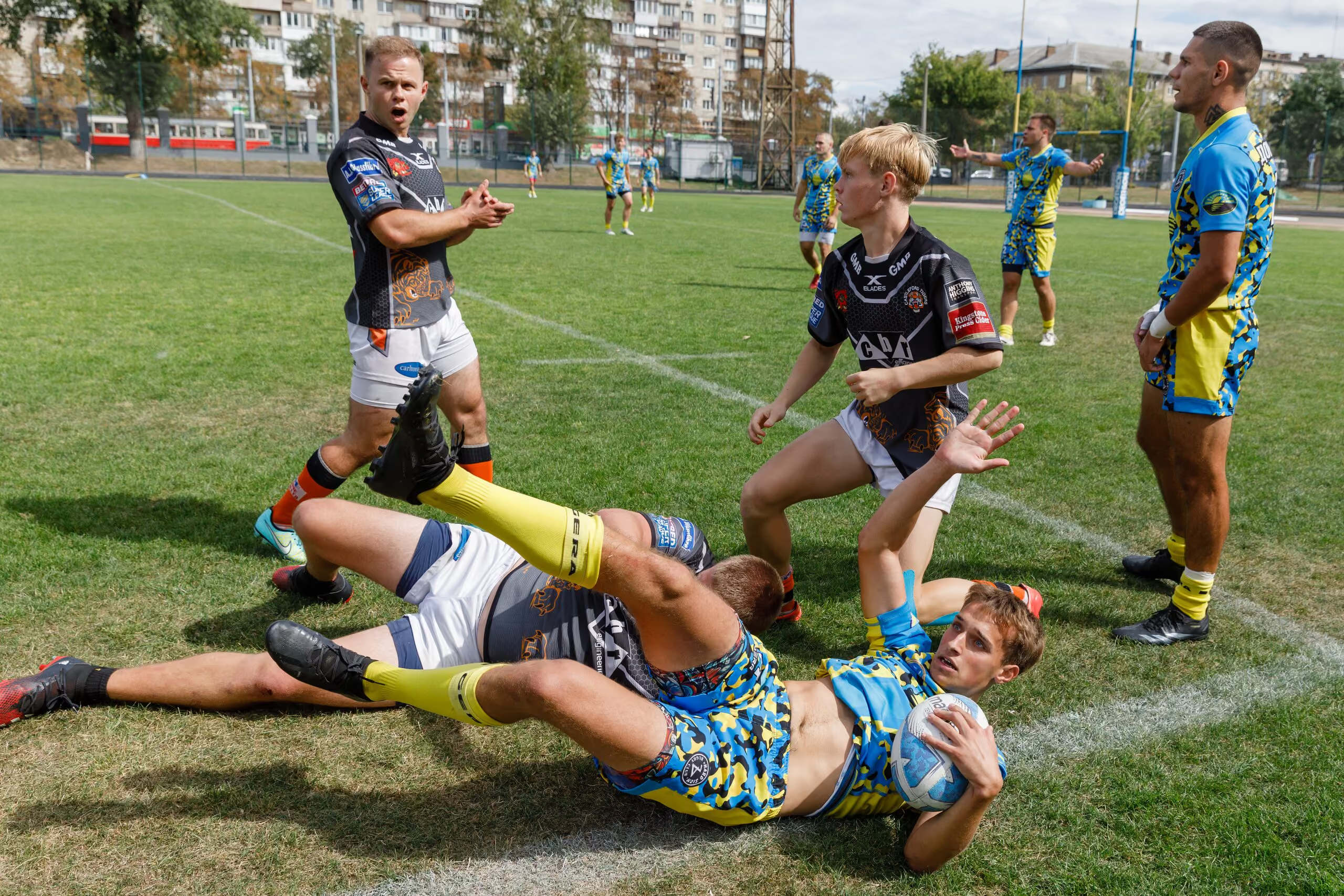
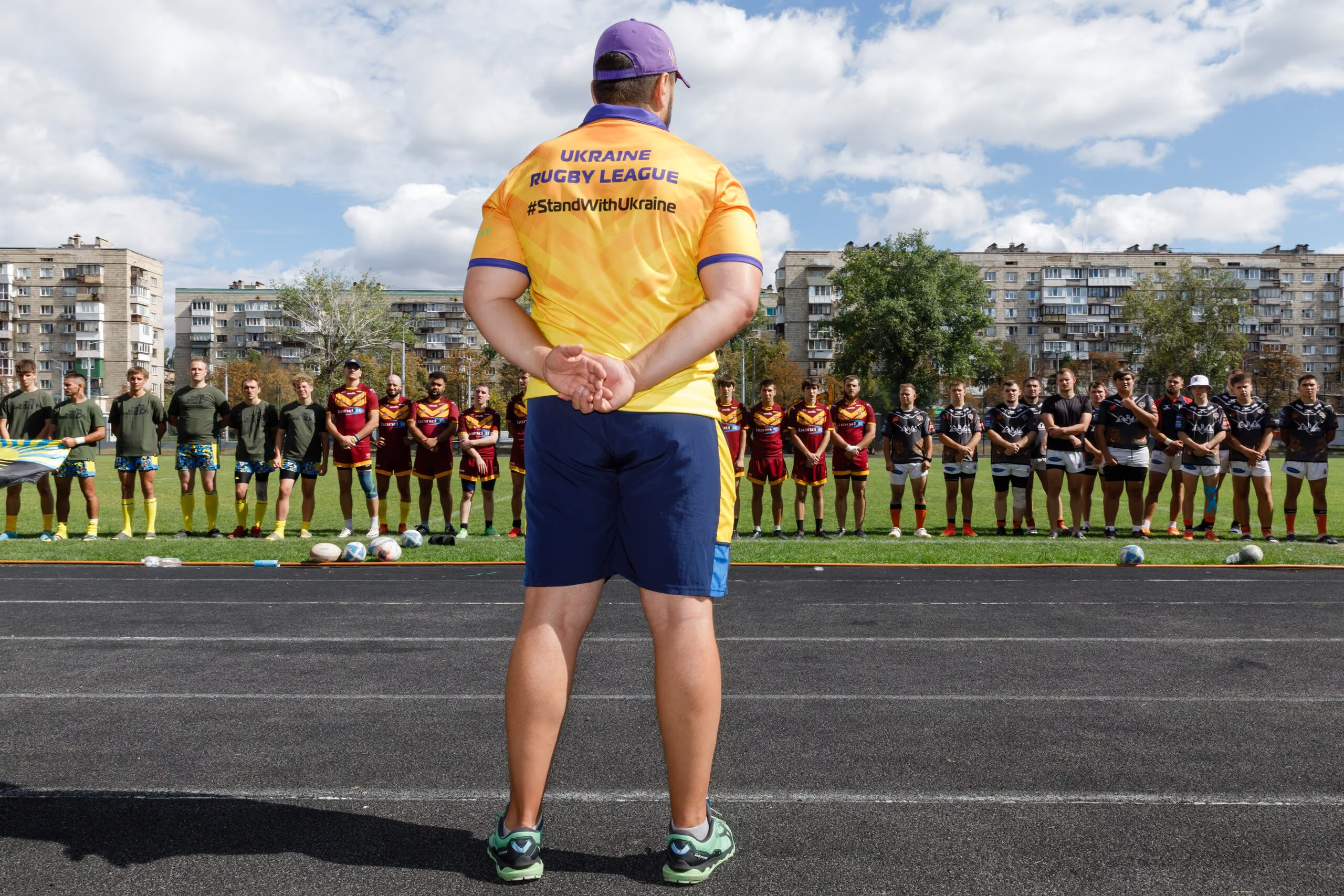
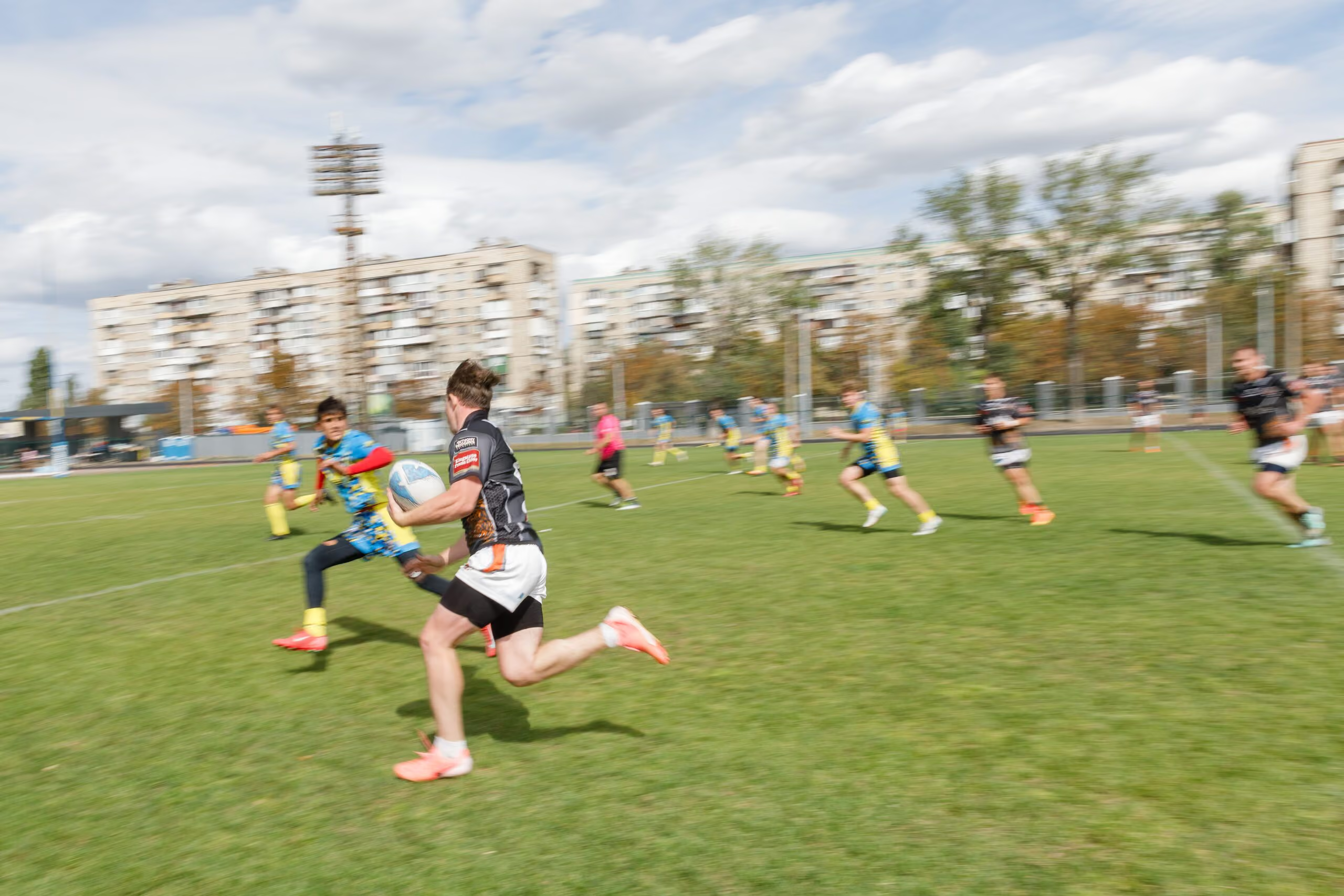
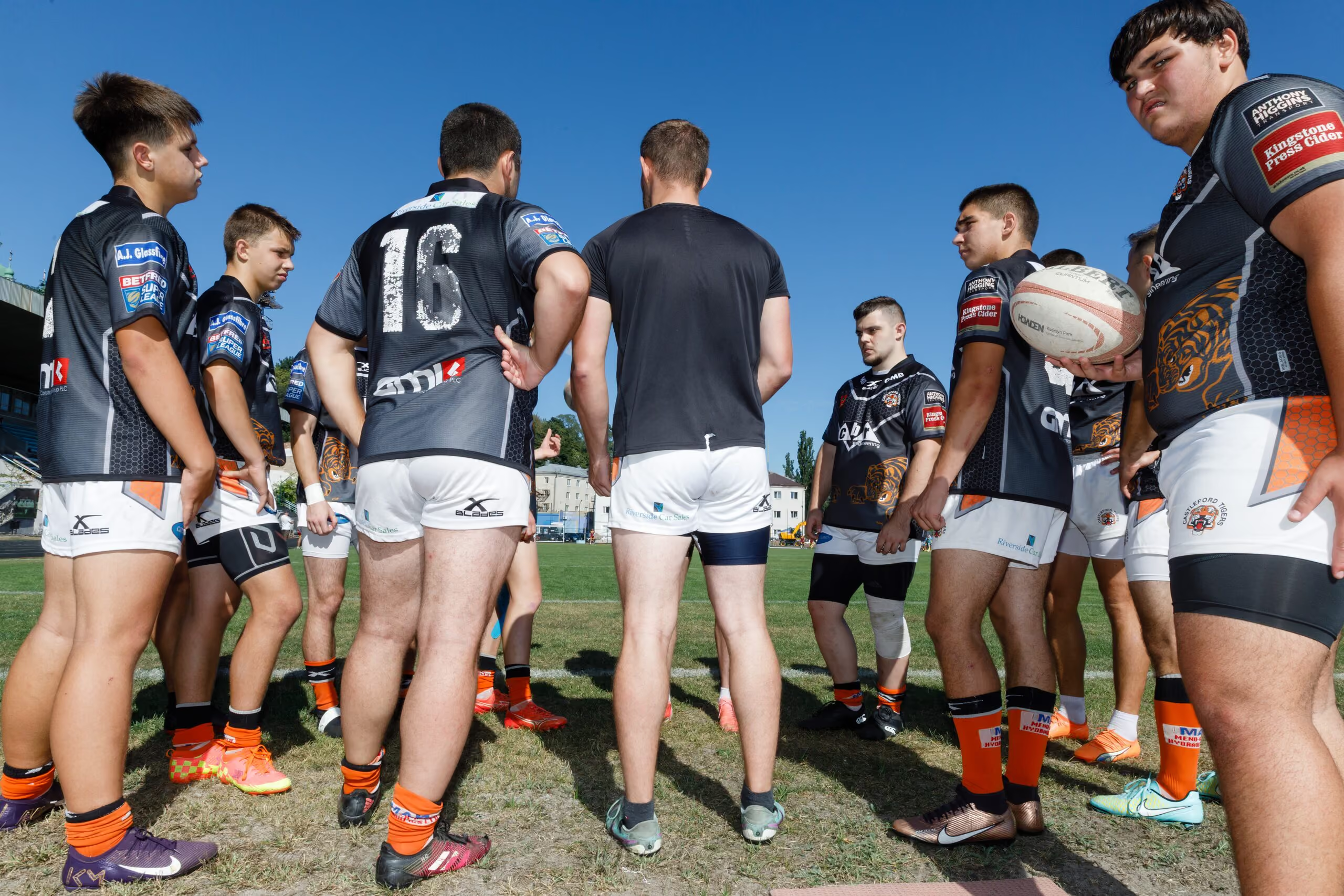
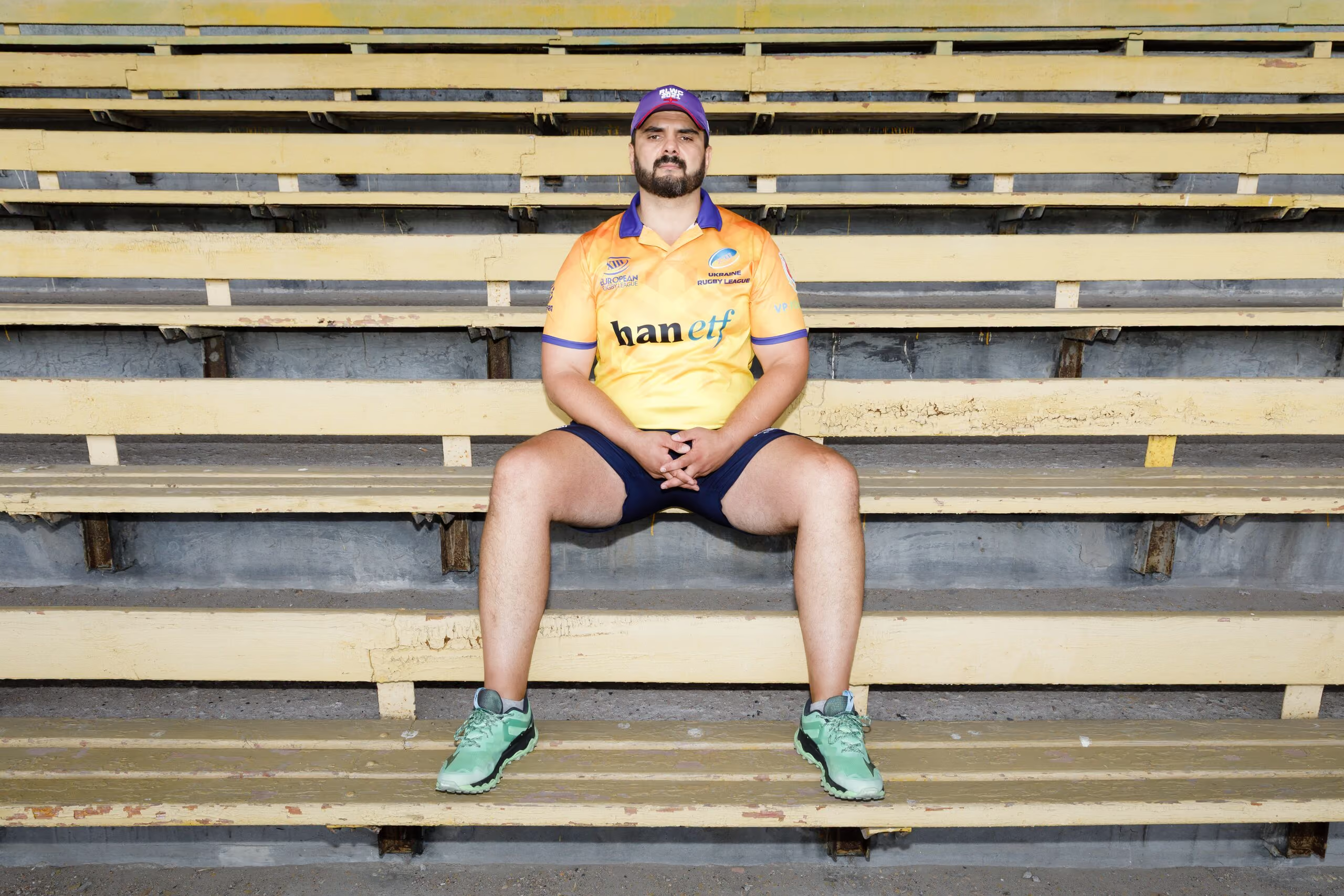
Three months after success in Serbia, Ukraine’s heritage experiment was ready to make its senior bow. Beardshaw and his recruits were in the tiny Czech town of Letohrad for a match against Czechia, a warm-up ahead of 2026 World Cup qualifying in France.
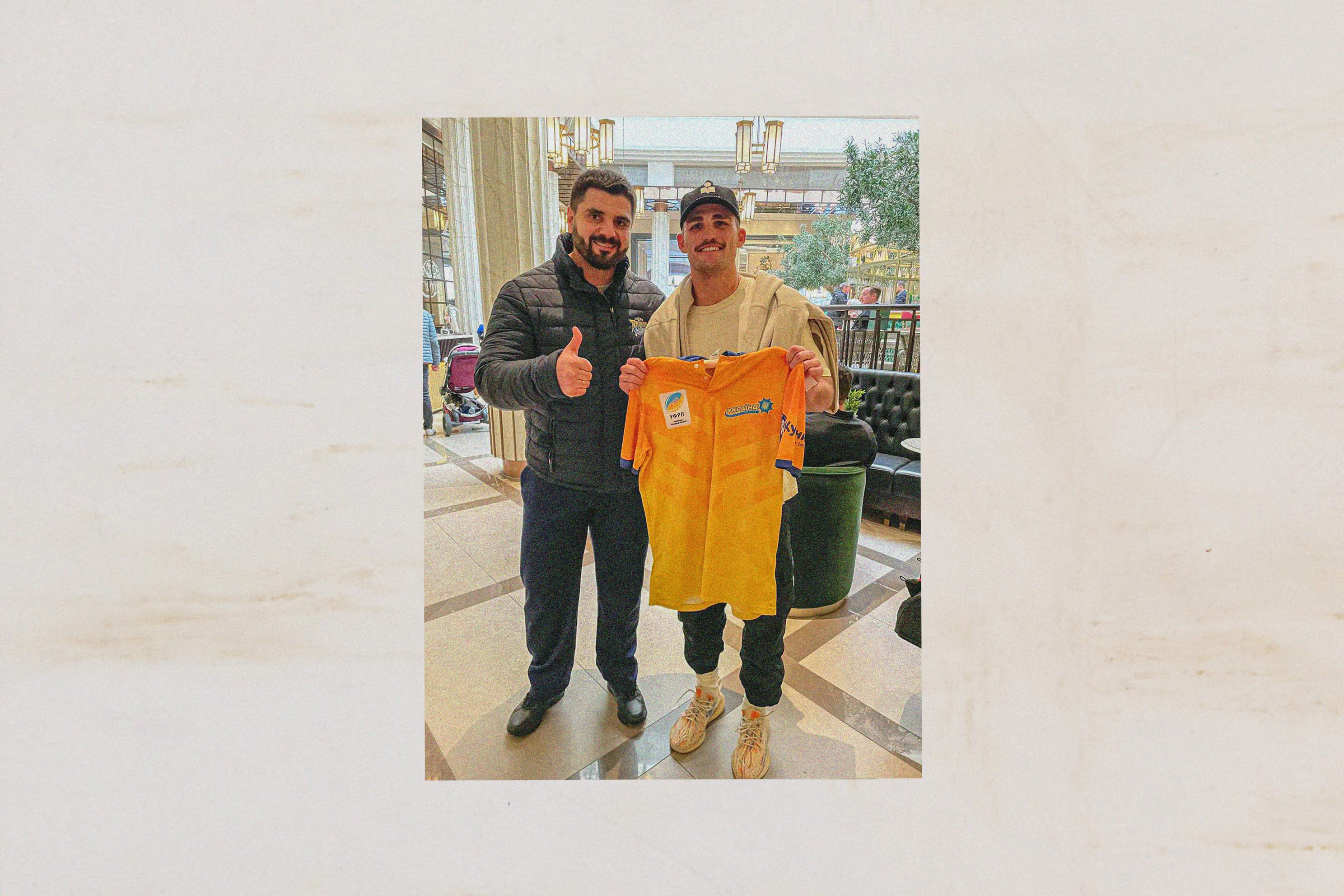
After 18 months of relentless WhatsApp chat that defied their contrasting time zones, this was the moment coach and founder finally met in person. “I walked in and he just looked like a big teddy bear,” Beardshaw says of a towering Martyrosian. “He shouted ‘Daniel!’ in his broken accent. It felt like meeting a long-lost brother.”
However hard patriotic exile Peter Kobryn had tried, little could prepare the heritage players for the sobering experience of joining the Ukrainians. Among their new teammates was Vitalii Puchkov, whose mother had been killed only two weeks earlier following a rocket blast on her Kharkiv apartment. “We thought he wasn't going to come to us,” says Beardshaw. “But he said, ‘No, I want to play.’”
Those first days were quiet camps, with hesitant players unsure how best to communicate. It was down to Beardshaw to fix that, but he too was wary of overstepping the mark. “The first time I went across there, I was pretty quiet. I was observant. I didn't want to step on toes. I didn't want to go in and say, ‘No, that's wrong, this is how we do it over here.’ I wanted to say, ‘Hey, we're here to help. We're not here to take over.’”
Ukraine's rookie team manager, Bozhena Kuzmych, was tasked with interpreting Beardshaw's instructions. But, with a background in gymnastics and paragliding, she was no expert in league lingo. Her new English colleague wasn’t concerned. “If I just go with energy and I'm pointing and saying something, language doesn't matter. It will translate across.”
Instead, his priority was for his players to defy the language barrier off the pitch. That meant mingling at mealtimes, and making good use of the Google Translate app. Beardshaw felt it was important for the newcomers to add some Ukrainian words to their daily vocab. Practising what he preached, he’d give all tactical plays Ukrainian names. “I set a standard for our heritage boys. This is not our rugby league team, this is their rugby league team. They've invited us, so we need to be respectful. You need to go around at every opportunity and say Ukrainian words. It doesn't matter if you butcher it. Just have a crack.”
Beardshaw also found that the trusty male icebreakers of potty mouths and booze still applied. “The old Dutch courage helps after the first game or two. And then there was one session when I started swearing because I wanted to really drive a message home.” Only Kuzmych refused to curse. “She said, ‘I'm not swearing’, and she went red. Those who could translate started laughing.”
If some Ukrainian players remained a little unsure about the new setup, Beardshaw was understanding. “They'd had some success before we got involved, won a couple of competitions and then lost a few games. Possibly it was the fear of the unknown.” He was convinced that any insecurities would dissolve the moment he got them on the pitch. “Everyone knows how to catch and pass, everybody knows how to kick. We played some really fun games to start off with, then built in the competitiveness.”
They began in promising style, overcoming Czechia in a thumping 84-0 win. But next they faced the daunting challenge of a French team crammed with Super League pros.
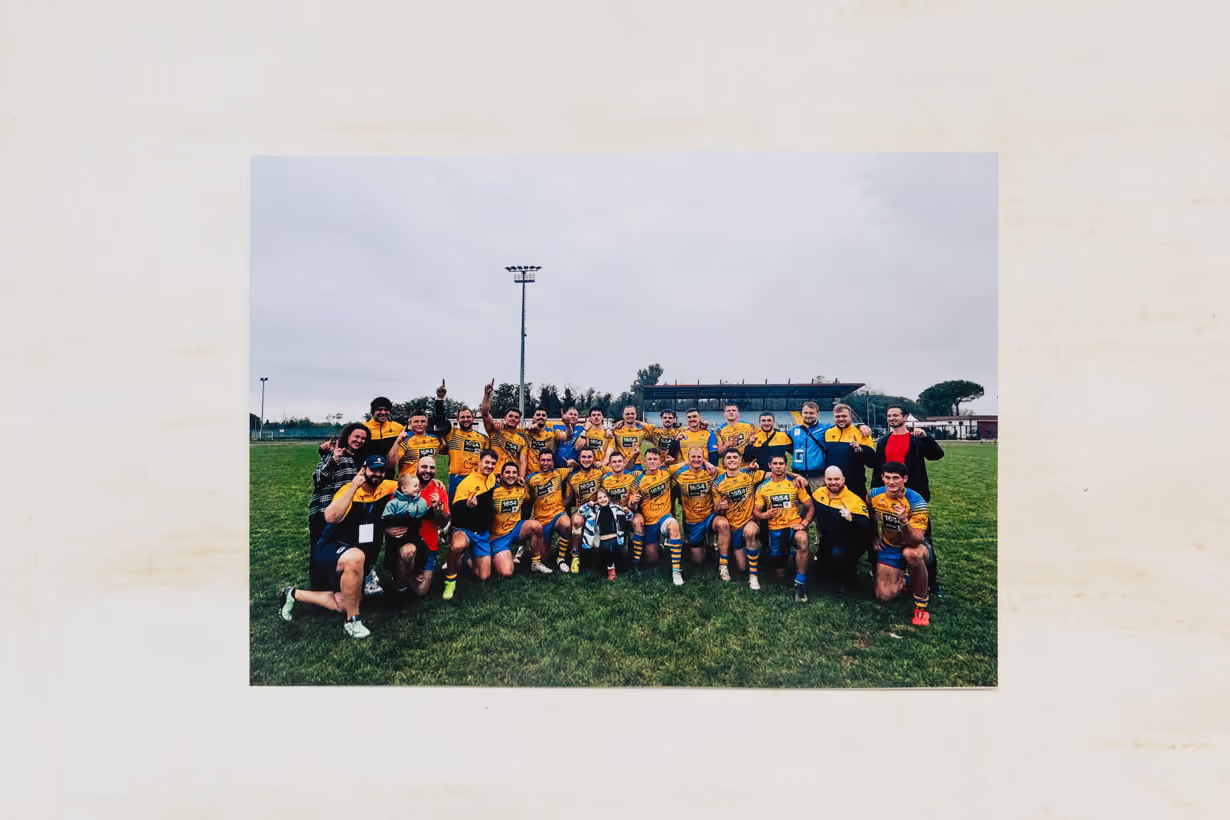
Two hours before kick-off in Carcassonne, word spread that Ukrainian refugees were arriving in their droves. Martyrosian and Beardshaw took their players out to greet them. They met resilient women and cheerful kids, all draped in the blue and yellow of the Ukrainian flag, representing the azure skies and golden fields they can’t be sure they’ll see again. “I had goosebumps. There were probably two or three hundred people with flags, and when they saw our boys, they were cheering, chanting, and singing,” says Beardshaw.
A dominant French side proved one step too far, and Ukraine’s slim chances of qualifying for the 2026 World Cup were over. But the score mattered little to those far from home at the Stade Albert Domec. “You could see in their eyes what it meant to them,” remembers Beardshaw. “Here was a group of men representing not only rugby league but the country these people had fled from, thinking it was going to be destroyed. It brings that sense of normality and hope: our country is still going.”
Days later, they finished their first autumn together with a stinging defeat to Serbia in the third-place play-off. They’d matched their opponents for long passages of play before fading. “We were on par with them, and then we crumbled a little bit when the pressure came,” says Beardshaw, attributing the loss to a lack of game savviness. “Some of our players aren't used to those longer games where you're in an arm wrestle and you've just got to wait it out. So it's about teaching them that patience and that grind.”
Those lessons would need to be taught from 9,000 miles away. Beardshaw reviewed training sessions sent to him over WhatsApp, before returning feedback. “I clip videos and do PowerPoint presentations, with English on one side and Ukrainian on the other,” he says. “What I send them is absorbed really quickly.” Occasionally, he’s given a stark reminder that this is not a normal coaching gig. “Some of the players say, ‘I've got a bad signal, I can't watch that video right now, I'm in the trench.’” When another sent a video from near the front line, his coach’s reply was simple: “Hey bro, stay safe.”
It would be a year before Beardshaw got another chance to work with his squad in the flesh. And it was as he was preparing for a second autumn in Europe that he received a welcome injection of star power. Just as Nathan Cleary had predicted, younger brother Jett - the hotshot 20-year-old halfback at New Zealand Warriors - made himself available for Ukraine.