Paris on Film

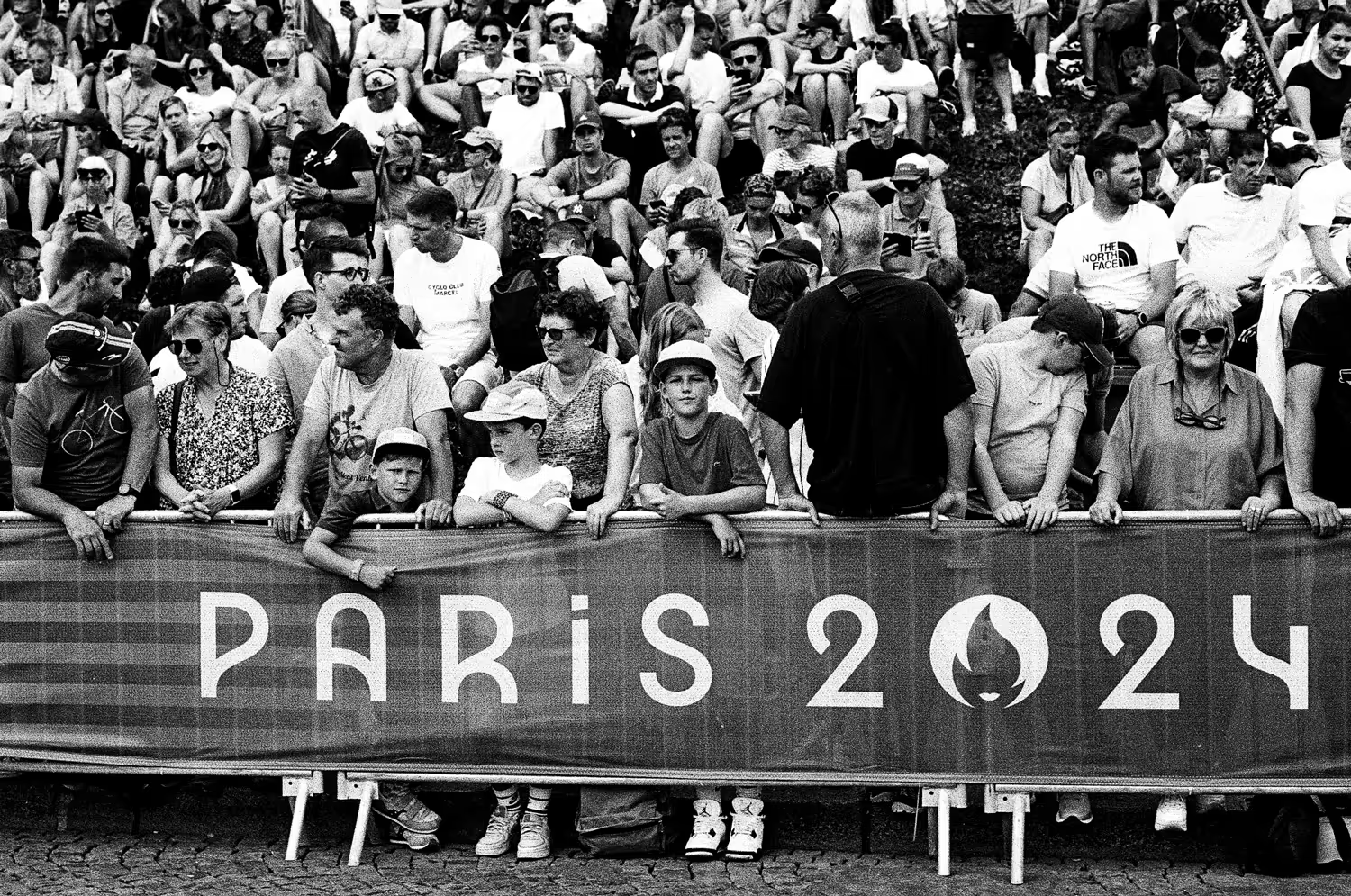
In 1924, Paris hosted the eighth Olympiad. A century later, the Games were back in the French capital for its 33rd edition. Brazilian photographer Thiago Ribeiro was there with his camera, shooting on film to explore an old way in a new world. Initially wrestling with the crowds before deciding to make them part of his work, Riberio describes the flow state and the embrace of intuition that led him to point left when the whole world looked to the right. Paris on Film was the result...

Being fully present: I'm from a small town and lived there until I was 20. Then I moved to São Paulo to study law. I chose law because of how people in my city and my family think about careers. If you want to succeed in life, you choose between law, medicine or engineering.

A short time later I realised that sitting in front of a computer every day reviewing contracts wasn't for me. I entered law university in 2013 and started experimenting with many fields: tax law, corporate law, competition law, contracts. But eventually I realised that the whole dynamic wasn’t for me. I didn’t like the people I was dealing with, and I didn’t enjoy being in front of a computer reading boring things all day. I can honestly say that I hated what I was doing.

The best moment of my day was when I went outside, even if it was just walking to a grocery store. Perhaps as a way to find balance in a routine I couldn’t stand, I dove headfirst into long-distance running. Running became the moment in my day where I felt free. Sport is something that has always been present in my life since my childhood - being outside, in nature, not wearing shoes, just running around. 

Photography came later, almost as a natural consequence of discovering myself doing something I truly loved. Now I realise that trying to be fully present is what inspires my photography the most. When I’m really aware of what’s happening around me - on my left, on my right - I feel like I enter another state of being. And that absolutely contributes to my photography.

In my life, photography catches me fully immersed in each exact instant. Not a second before, not a second after. It is a rare - and necessary - thing in a world that insists on letting us think about what is next. Living now: this may be the right way to begin describing my photography.
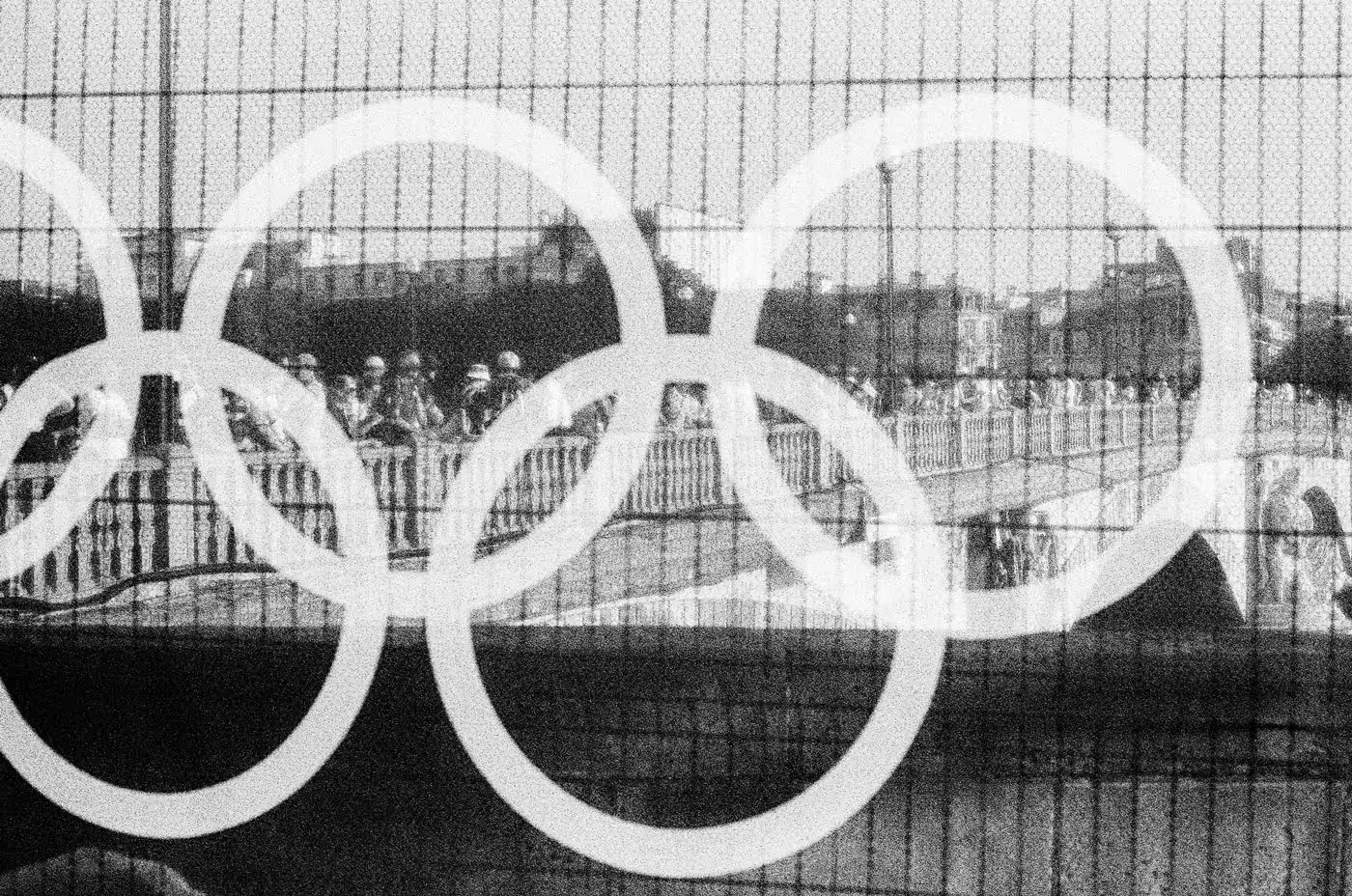
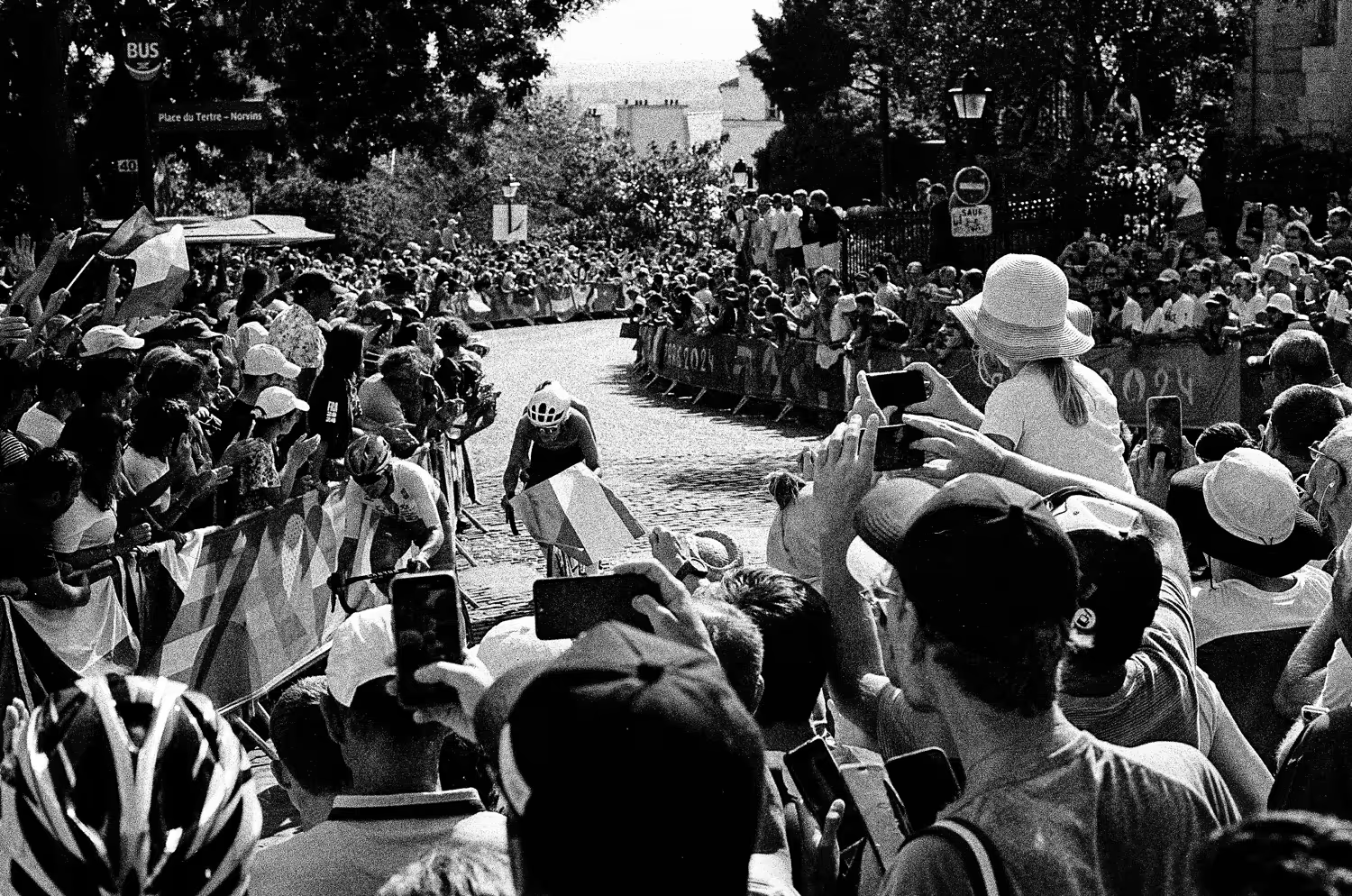
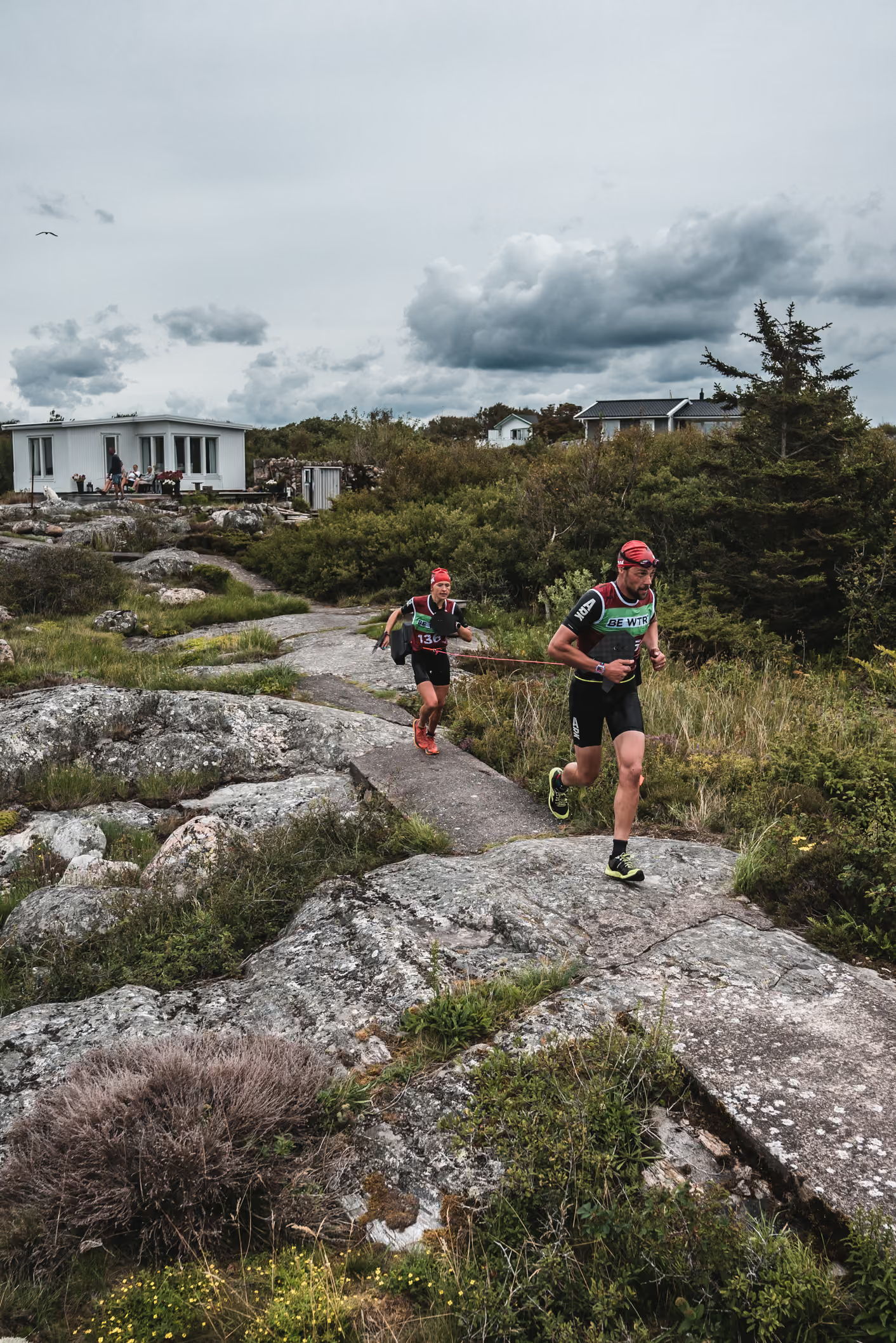
▾ Thiago originally went to Paris to document the journey of triathlete Miguel Hidalgo, before turning his lens from the road to the pavement

Obsession as inspiration: Before Paris I got to know Miguel Hidalgo, a Brazilian professional triathlete. At the time I met him he was still a rising prodigy. He was my first real contact with an elite athlete. He introduced me to this beautifully insane routine of someone who is not merely determined, but obsessed. Truly obsessed. Dreaming every day about the moment of competition. I thought that was beautiful.

Miguel was also one of the initial reasons why I decided to go to Paris. I knew the risks and difficulties of his Olympic debut, but I wanted to make sure I was there in case he made the podium. I also have a long-term project in mind: a photo book telling his story.

But my wife and I talked a lot about whether it made sense to go. It costs money, and getting into the Olympics is extremely difficult, not only getting hired for assignments but also getting media accreditation. So we decided that maybe we should invest our own money and go there without expectations, just to see what would happen. 

Then, a few weeks before flying to Paris, I bought an analog camera - a Canon AE-1 Program with a 50mm f/1.8 lens - with some Ilford HP5 rolls. And I thought: it would be awesome to shoot Paris using only this old camera. So I went, totally obsessed with the process of shooting film.

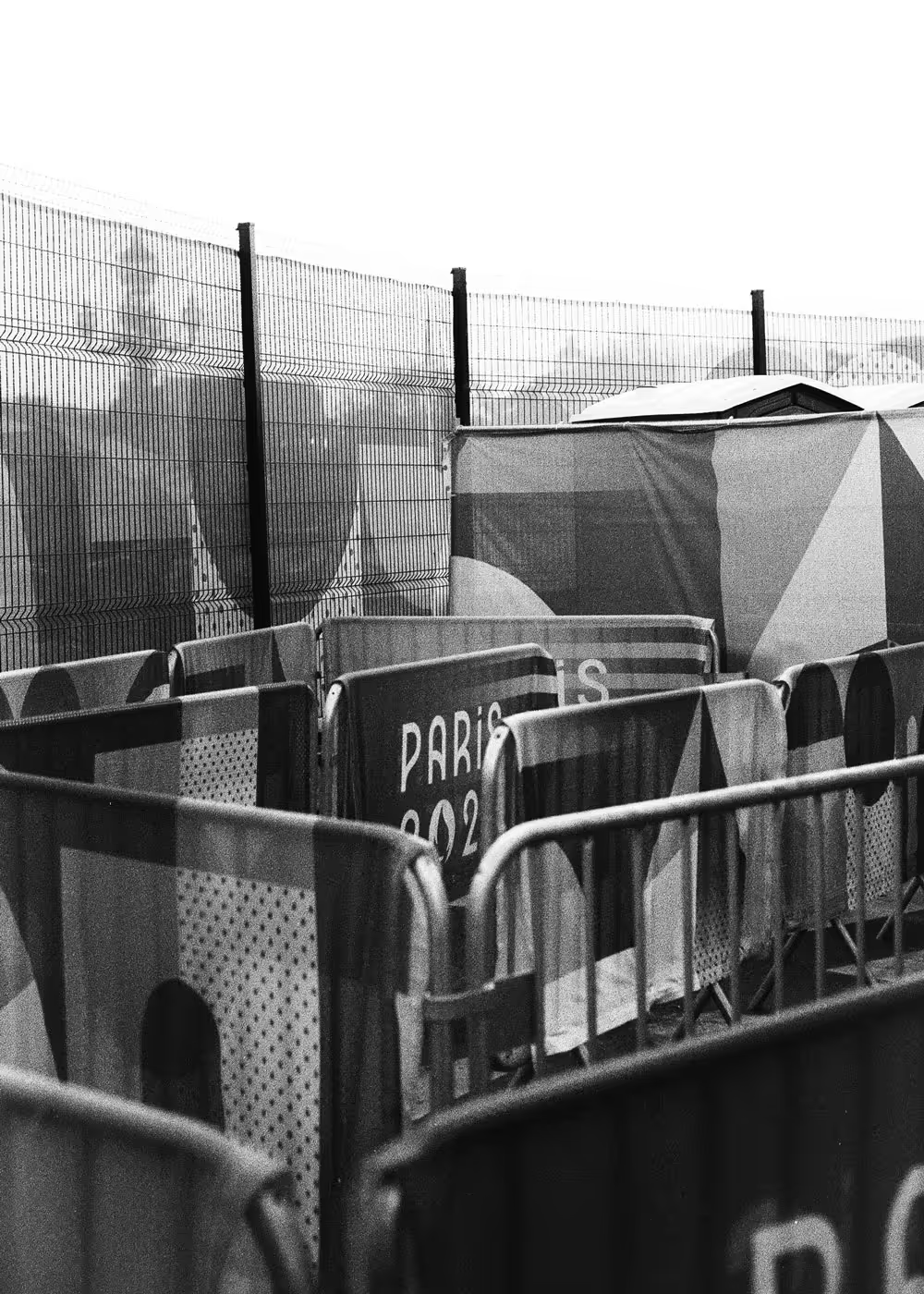
It’s an old way in a new world. Getting back to the analogue, to eyes and fingers on paper. It’s an ode to the unknown. It’s refusing to scroll all day on mobile screens. It’s a pause in the chaos. It’s also a walking tour in Paris from 2024, long after 1924. A century that divides two different worlds and also two Olympic Games, all in the same physical space. How much can we fit in 100 years?

Shooting film: I fell in love with the idea of shooting all day without seeing the results. You care more about each moment before clicking. And there is the vulnerability of it. Even after planning carefully before pressing the button, you are totally trusting that everything worked out well and that you got the shot.

I went a little bit crazy with it, honestly. The flow state was hitting hard. To be honest, I had almost no expectations for the trip. I was completely immersed in the process. It’s beautiful to remember that now.

It’s also very hard to achieve, having no expectations about something. But that’s part of the flow state: focusing 100% on the process without worrying about the outcome.

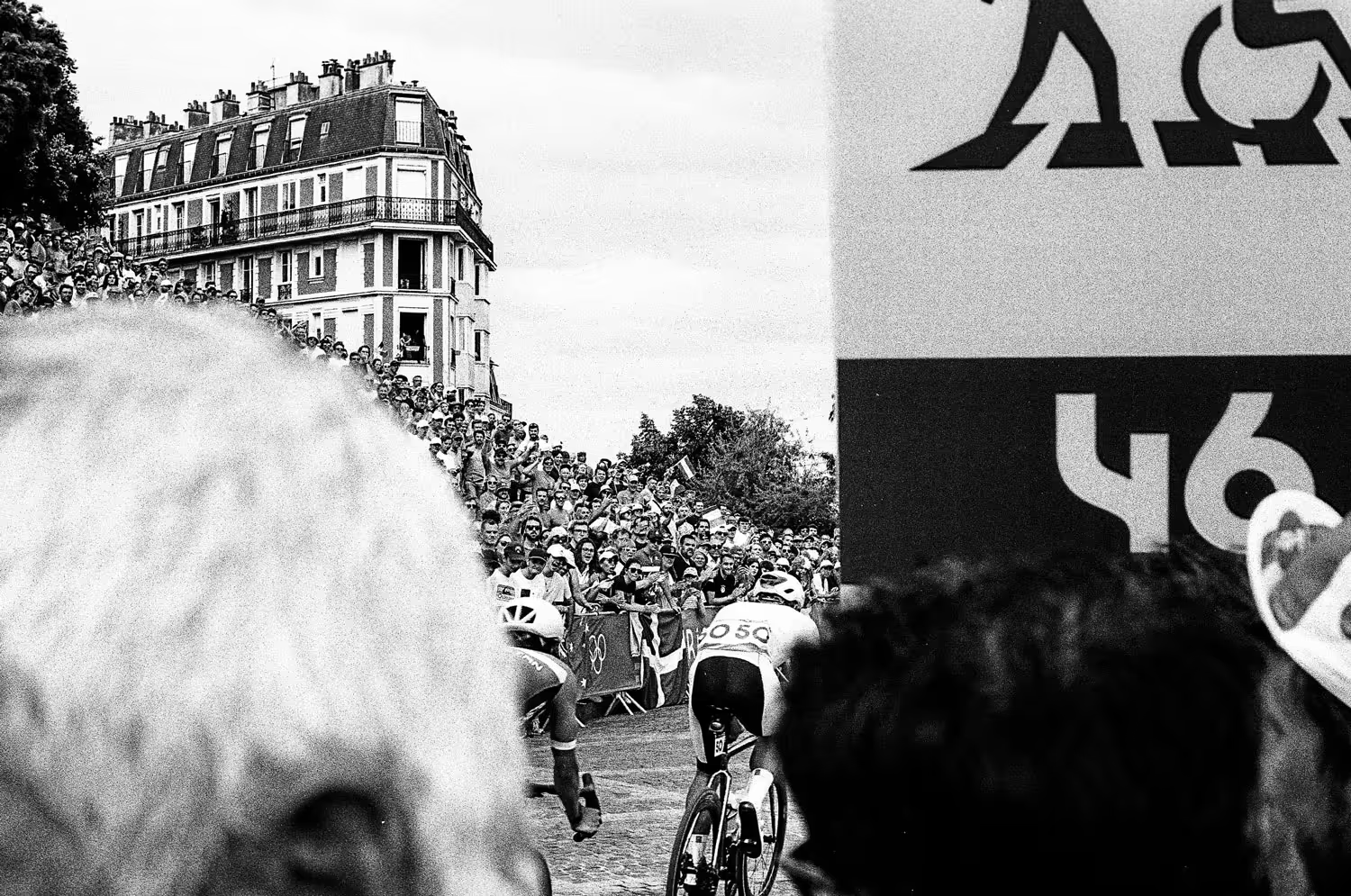
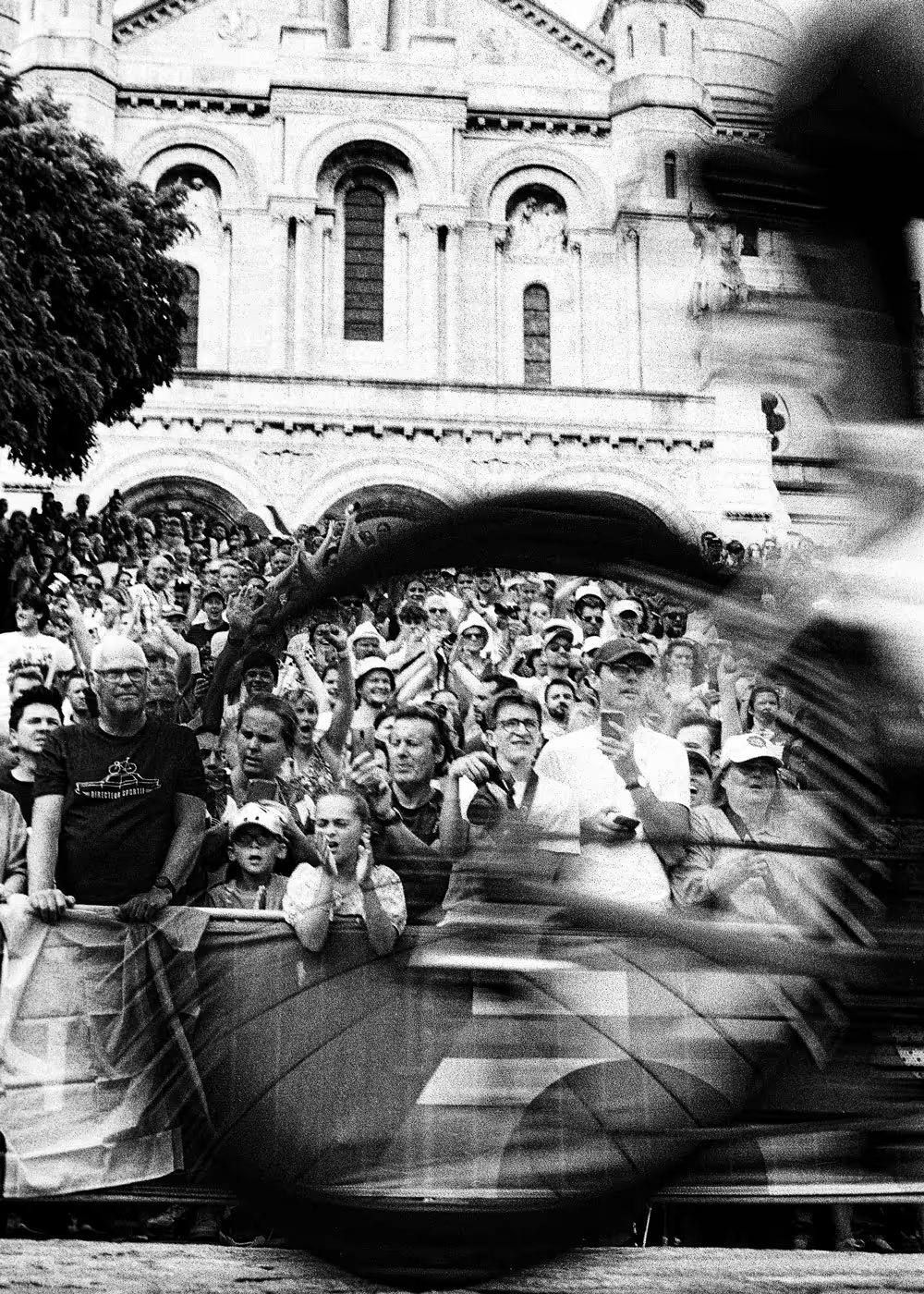
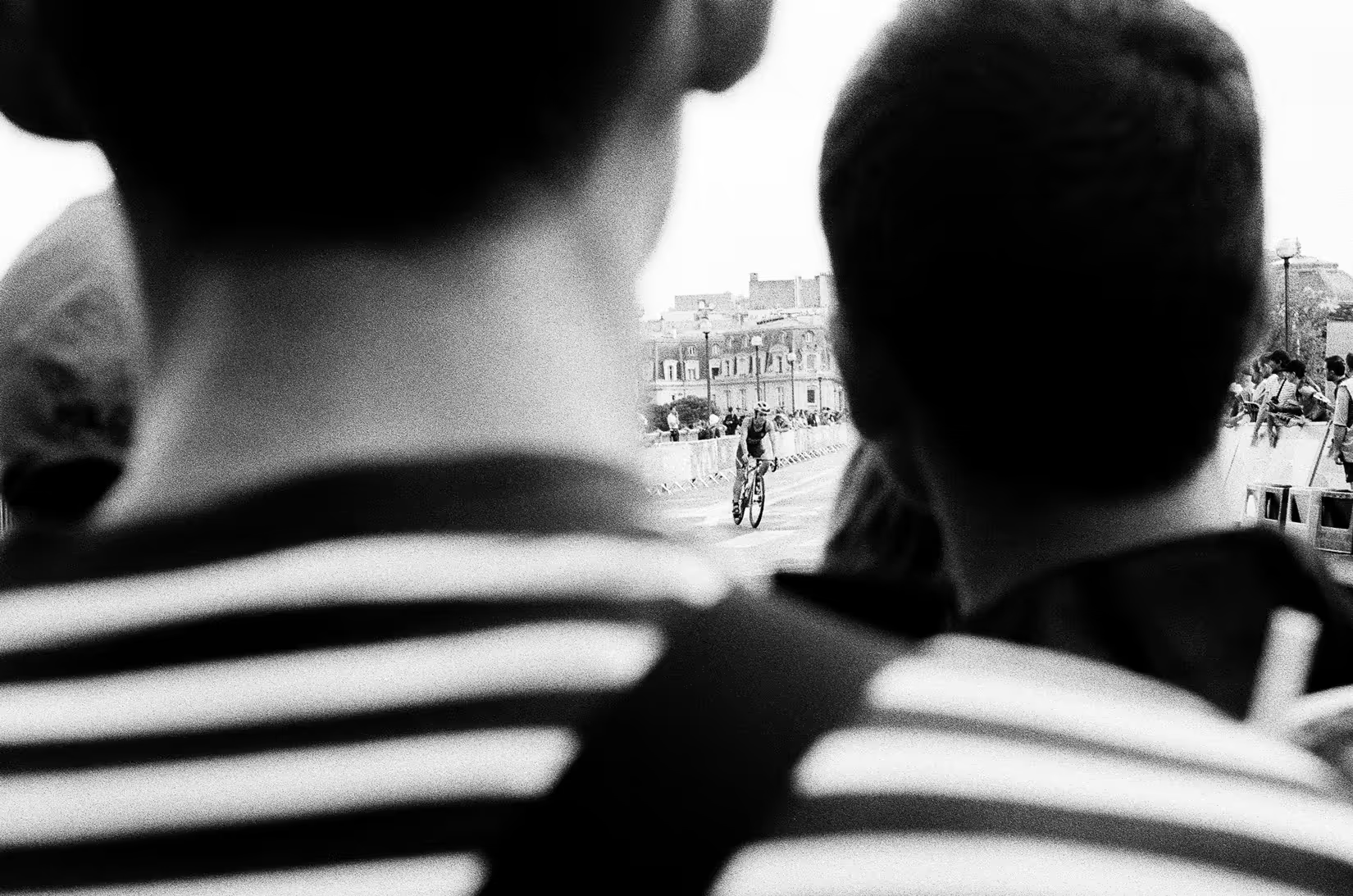
During the men’s triathlon race I was just in front of Sacré-Cœur. But it was so crowded, insane, and it was difficult to shoot. The next day I went to Montmartre for the women’s race and waited there for about three hours, just holding my position. I had been walking earlier looking for a spot where I could be slightly higher and see the course clearly. Eventually I found a small platform outside a closed shop.

There was shade there, which was important because it was extremely hot. From that spot I could see the athletes approaching from the right and climbing the street to the left.

Whenever possible I try to scout the location before shooting. I was able to do that the day before the triathlon race. I walked around to understand the angles, the light patterns and the perspective of the course. But that’s the maximum I do in terms of visualisation, I prefer to keep everything natural.

Intuition versus accreditation: My photography has more subjective elements than objective ones. Of course technique is essential and I’m always trying to learn more. But I’m also a big fan of intuition. You don’t need to follow rules. You need to know they exist and understand how they work, but you should also experiment, take risks, follow your heart. My photography is becoming more and more a reflection of who I am as a human being, my values, my worldview, my beliefs. These are the real visual cues behind my work.

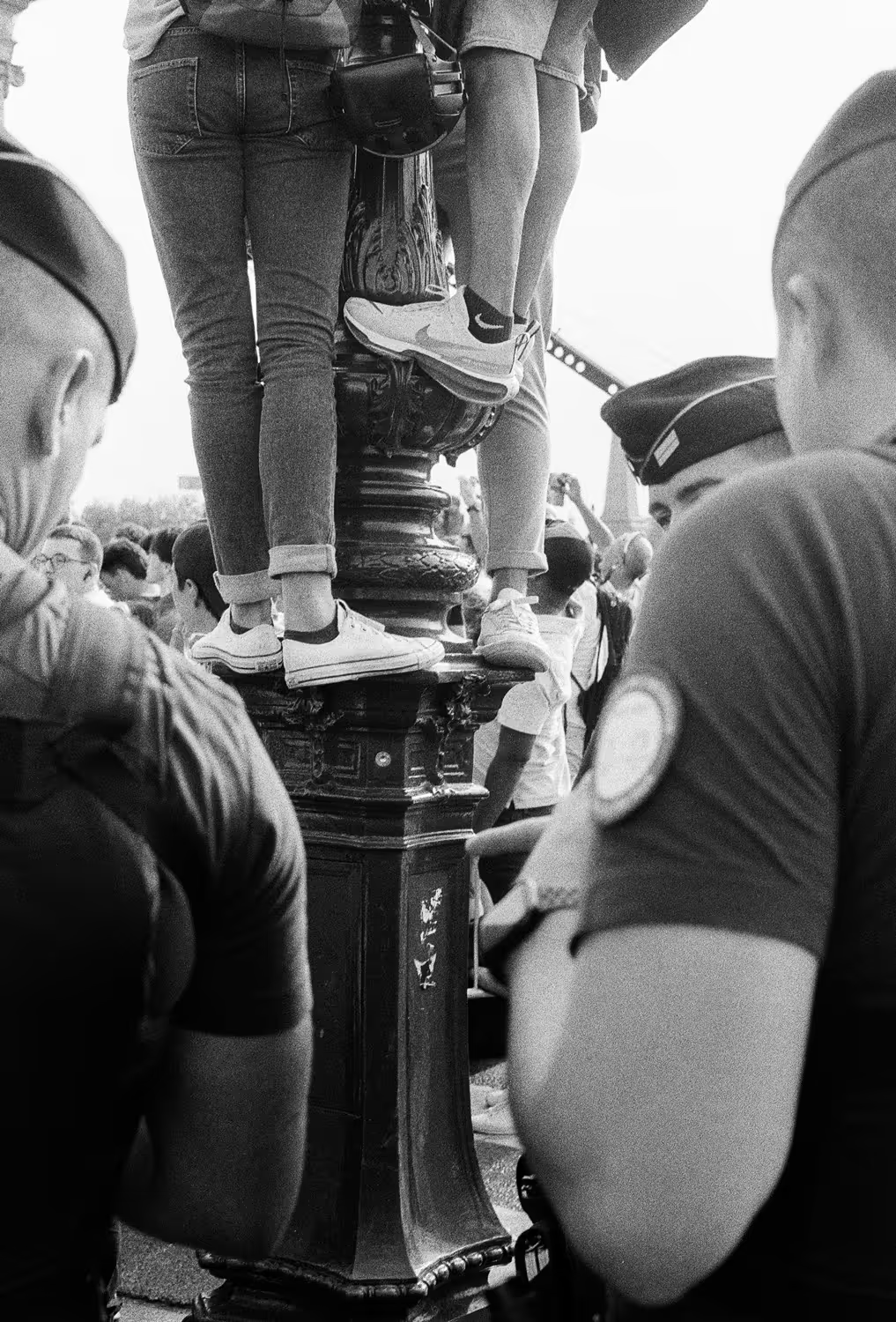
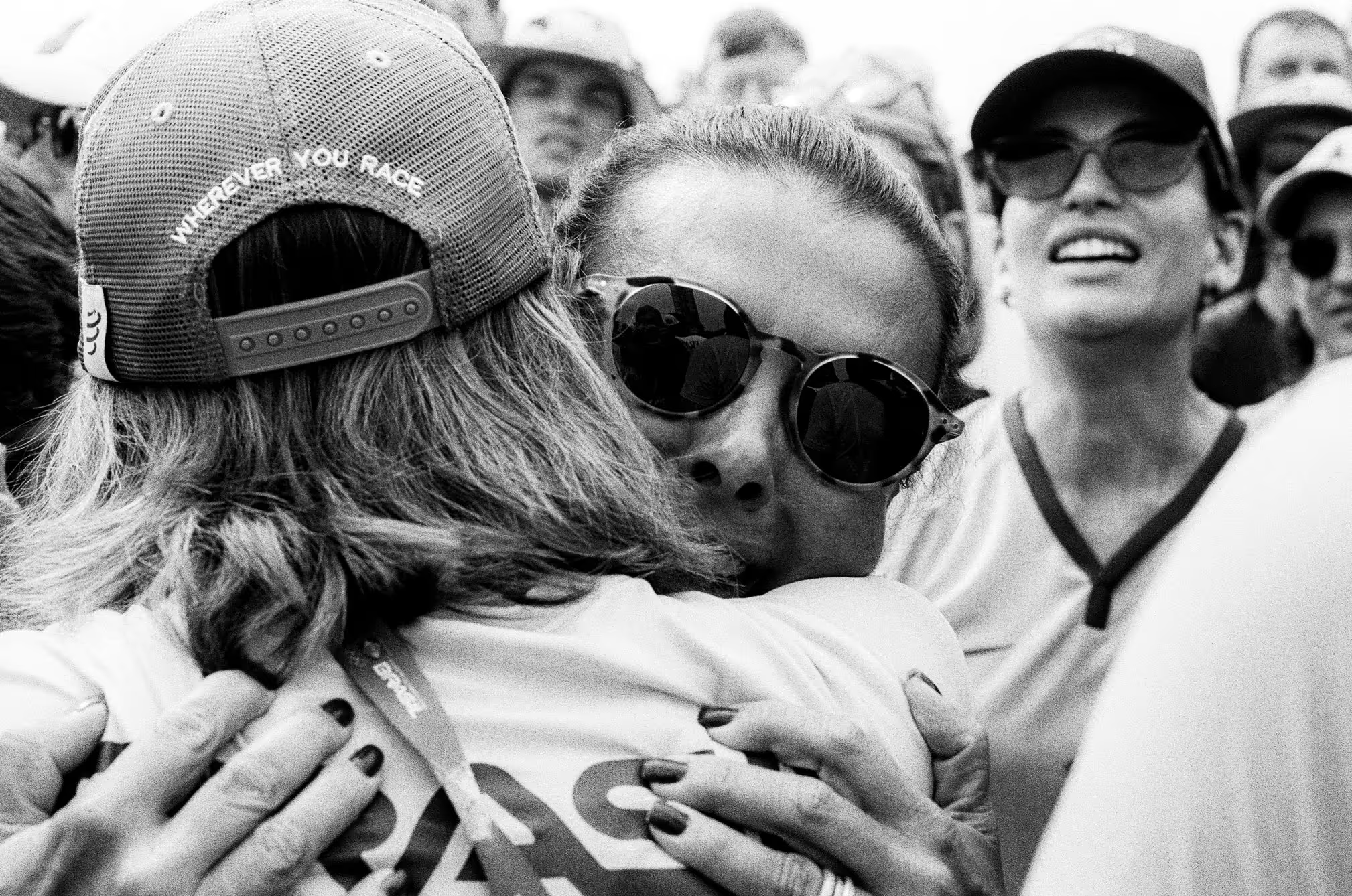
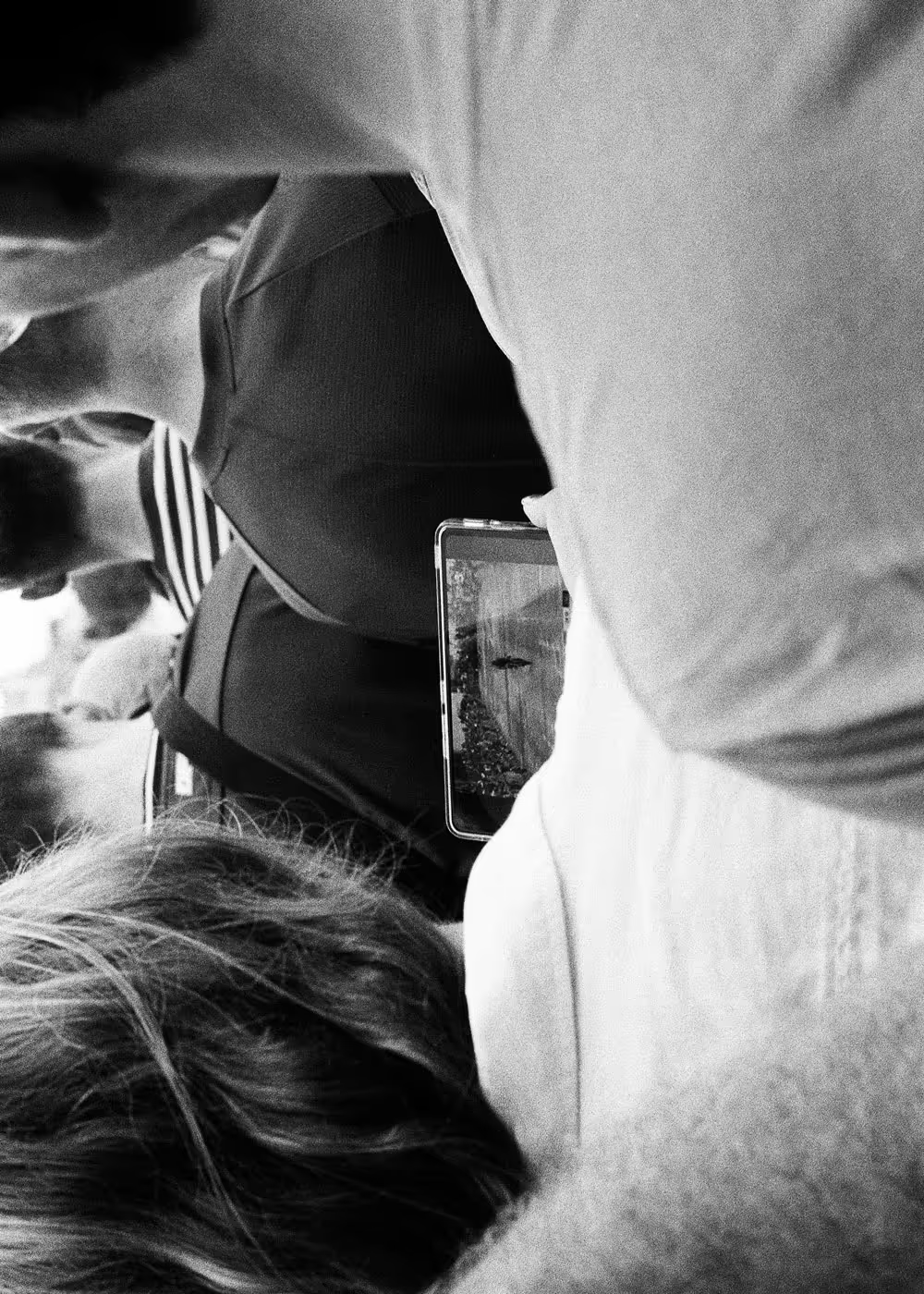
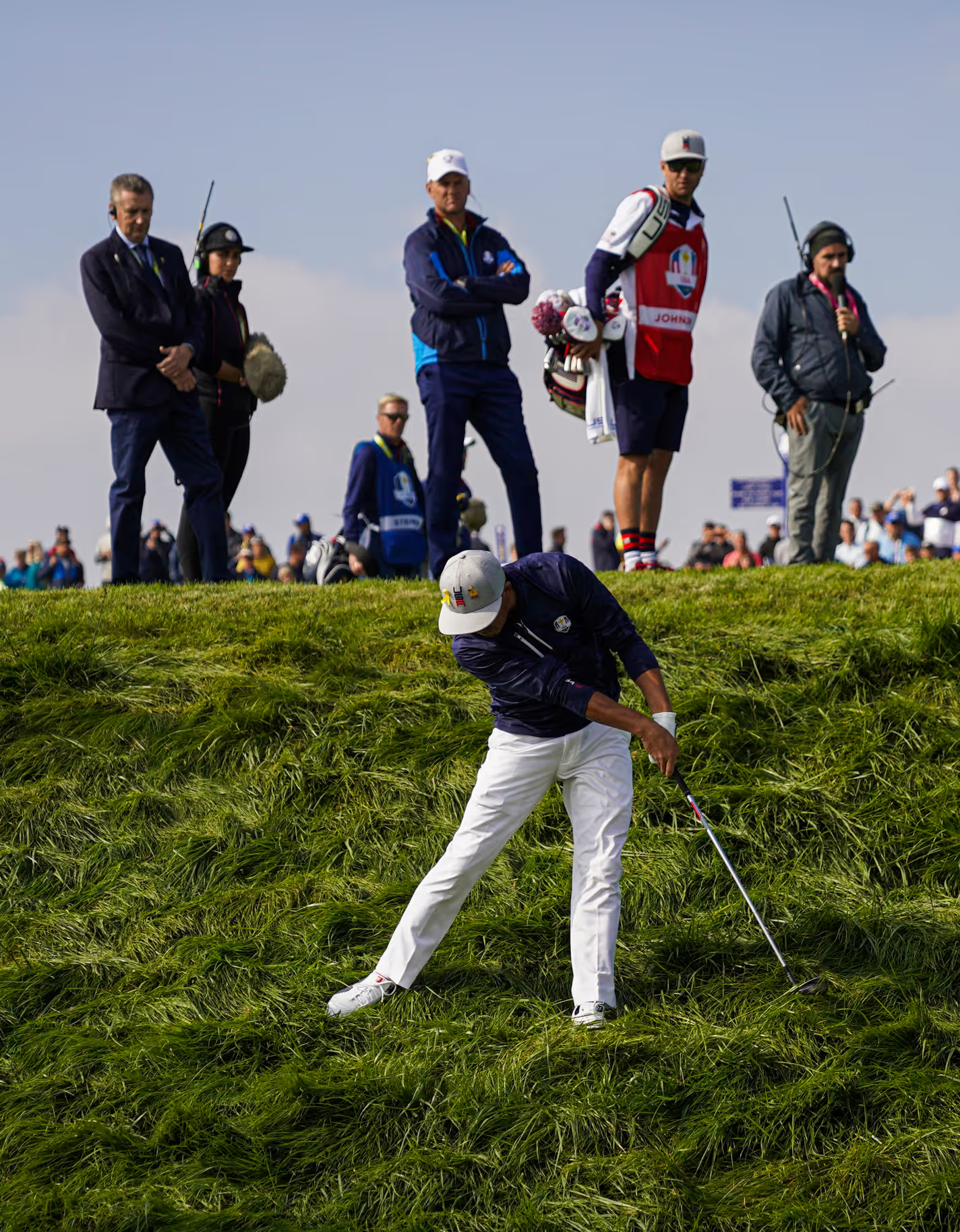
One of the best things I did in Paris was deciding not to photograph only the race. Of course I cared about capturing the athletes passing. But I also started paying attention to everything around me. Who were the people watching? What were they doing? Someone might be eating a banana while someone else is receiving a medal on the podium. Those things happen at the same time in the same place. I think after Paris I realised that documenting a major sports event with this “non-sports” approach is something I really enjoy.

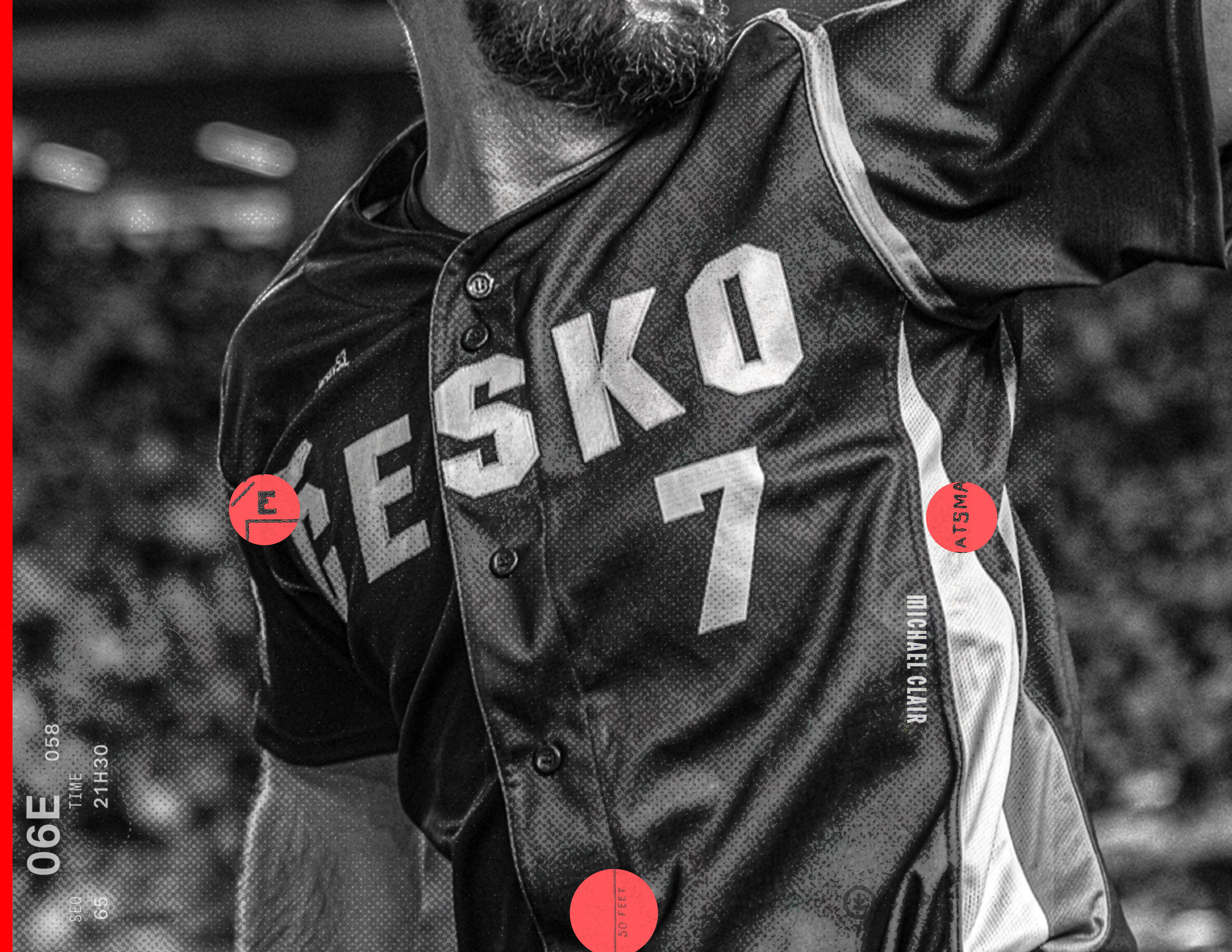
Last year I photographed the Boston Marathon, and at one moment I was in a room alone with the runner who had just finished third. He was about to call his family to tell them the result. It was just me and him.

I remember thinking how special that was, nobody else in the world saw that moment. Recognising those moments is important to me. Even if I don’t get the photo I want, I was there.

In Paris I didn’t have a media pass. Normally when I shoot races with accreditation it’s much easier because you can access everything. But in Paris it gave the experience a different feeling. I was also there as a spectator. 

At one moment I was buying a coffee and realised the photographer Pauline Ballet (paulineballet.com) was in front of me in line. She’s one of the best sports photographers in the world. I told her I was a fan, and she said she was going to the finish line because she had the best accreditation. But she also told me something interesting: she actually lives in Montmartre and wished she could stay there and photograph from her neighborhood. That made me think. She had achieved what many photographers dream about, but she still wanted the freedom I had.

"In Paris, the lens noticed what could go unnoticed by the distracted. A lens that goes for daily life scenes, looking for stories"
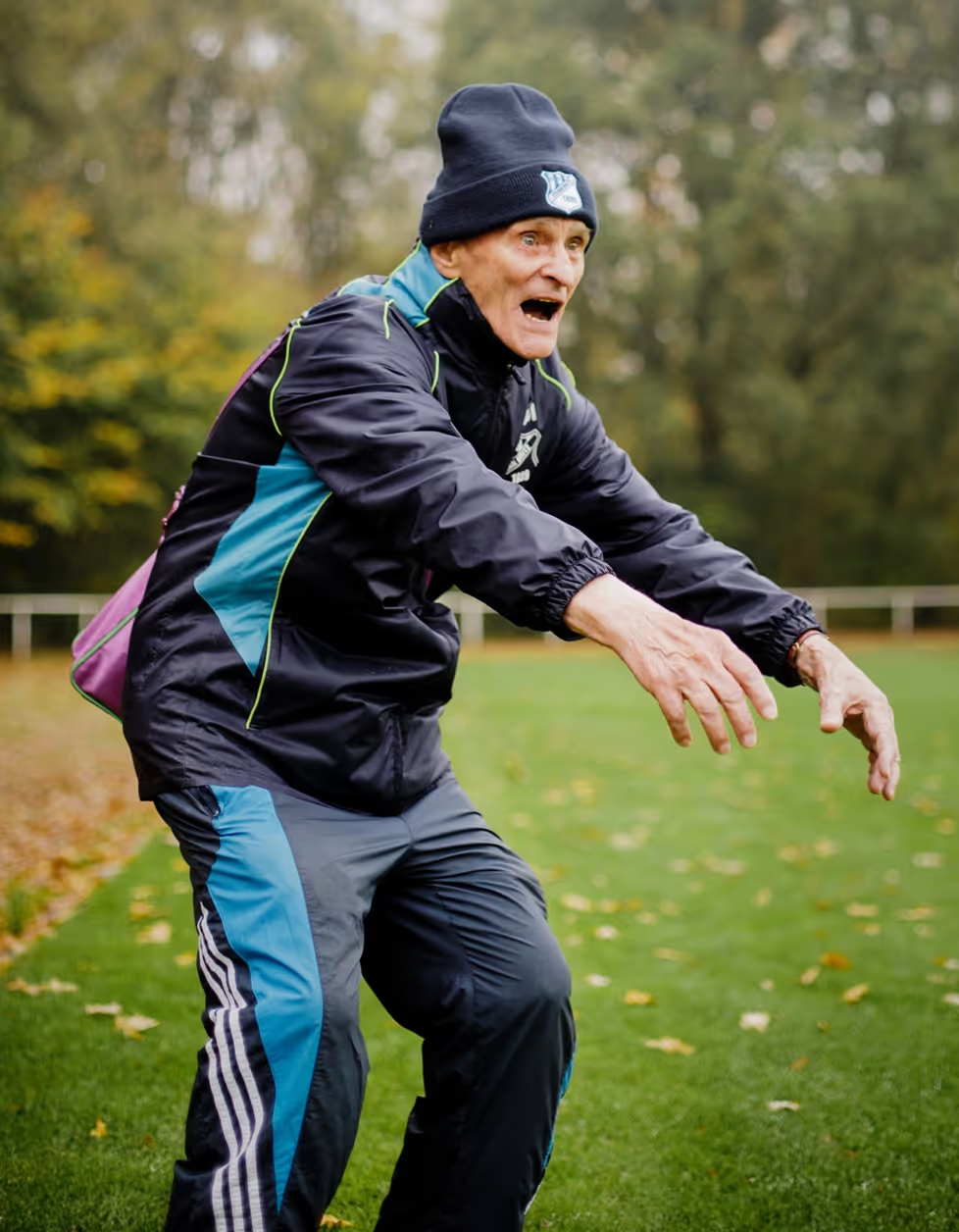
▾ Thiago enjoys making the unexpected his playground, trying to notice what often goes unnoticed by a distracted world

Discovering the moments in-between: In Paris, the lens noticed what could go unnoticed by the distracted. A lens that goes for daily life scenes, looking for stories. Avoiding the obvious, pointing to the left when the whole world looks to the right. Many people experience sport daily behind this curtain that opens so little and only for a selected few every four years. Sport is much more than these scattered spasms.

Just as literature or music, I think of photography as a way to express yourself to the world. In my case I try to focus on the ordinary, as raw as it can be. I go for daily scenes, looking for untold and hidden stories. I like to give light to the in-between moments, especially in sports, where those moments are often underrated. I usually make the unexpected my playground, trying to notice what could go unnoticed by distracted people.

And we are getting more and more distracted as a society. It’s harder and harder to give full attention to what is happening around us in the present moment. Analogue photography is also part of this ethos. It made me realise that embracing vulnerability and risk is something I want to bring more and more into my identity. Not only as a photographer but also as a human being.

There are many photographers whose work I admire. Christopher Anderson, Robbie Lawrence, Max Miechowski, Bruno Stuckert, Jack Bol, Jo Metson Scott, Dudi Hasson and many others. But more and more I feel inspired by simple things and patterns in nature. This inspiration is not directly about how I want to shoot something. That kind of visual inspiration I absorb from other creatives. What I mean is more a state of being. Keeping the mind and soul open to feel how the outside world affects your inner self. 

For example, observing the rhythmic way waves crash on the beach. Or how sunlight patterns change during the day. Or the sound leaves make when the wind blows. I feel that reconnecting with nature is important not only to make better photographs, but also to live in a more meaningful way. And maybe the connection is this: the more connected I feel to nature, the more I feel that my life is meaningful, and better photographs come as a consequence.

Slow process: While I was still in Paris I found a lab and asked them to process my film. This was the first time I had ever shot film, so I was nervous. I thought maybe I wouldn’t like most of the photos, but when I saw them I really enjoyed them. That was probably the biggest surprise of the trip.

There were some challenges. I missed some shots because of hesitation, adjusting the focus or waiting too long before pressing the shutter. And the crowds were intense. Because of the crowds there weren’t many angle variations for the race itself. But maybe that was a good thing, as it forced me to look outside of the race, and those are actually my favourite photos.

This project is special to me because it was my first time shooting film. I received great feedback, but one comment stayed with me. A photographer who shoots for World Marathon Majors, Creagh Cross, wrote to me saying: 

“You’re a 1975 Sports Illustrated photographer covering the world’s most important events. Keep doing your thing, it’s the best in the world and people will take notice.” I really appreciated that.

I live in Brazil and sometimes it feels like the media and brands here have a very commercial approach. It doesn’t always match the philosophy of exploring new ways of telling authentic stories. But I’m very happy seeing how this movement is growing in other places. Print magazines especially are pushing these boundaries, showing that slow content, holding paper in your hands, and a timeless relationship with storytelling can be much more meaningful than endless scrolling on a tiny screen. ■

Thiago Ribeiro is a Brazilian photographer based in Sao Paolo. ribeirothiago.com