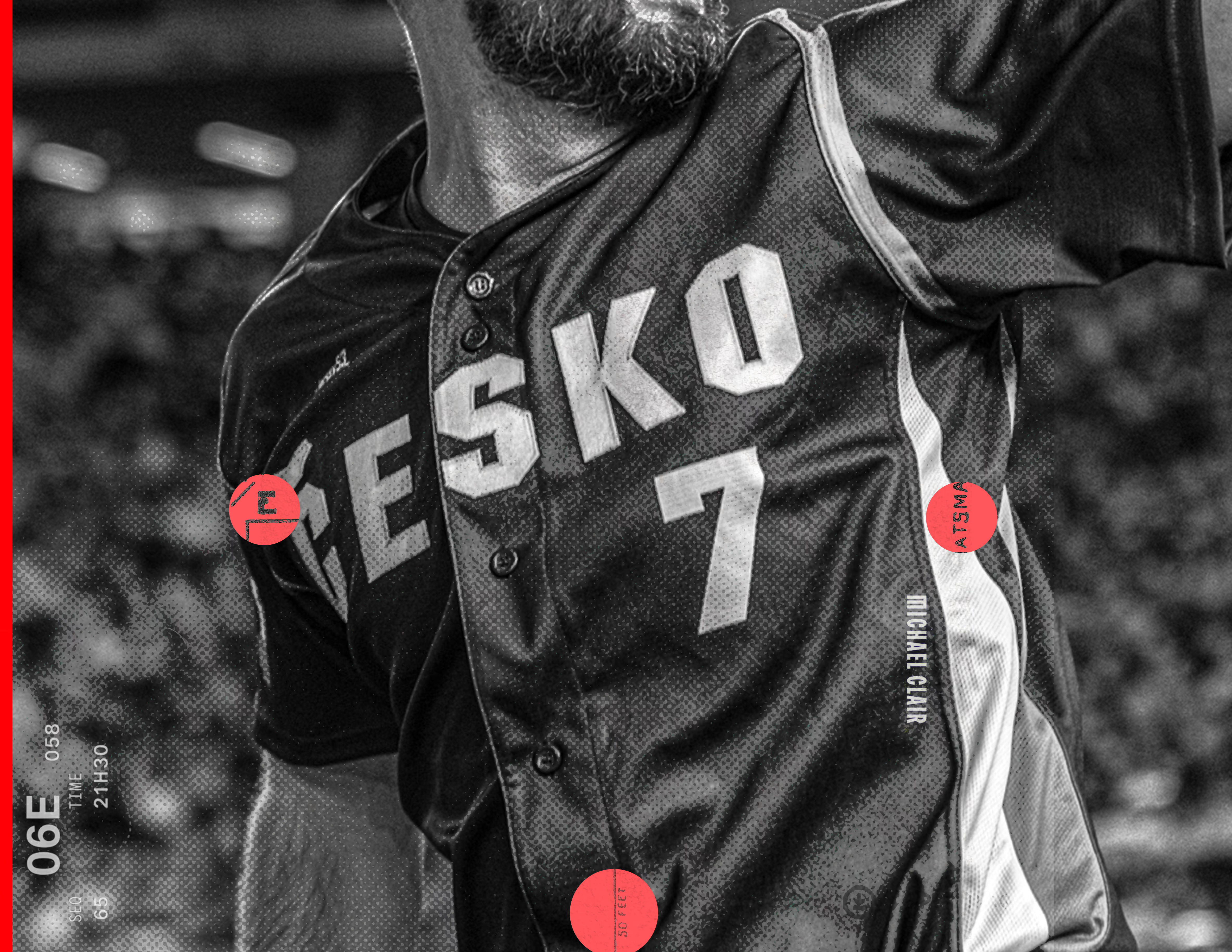
THE LONG GAME

As the lead international reporter at MLB.com, Michael Clair covers what happens when America’s Pastime finds its way on foreign diamonds. As our Volume #1 cover story demonstrated, his beat is growing. Along with Bhutan, Mike has covered the game in nascent baseballing nations like Australia, the Netherlands, and Brazil, while the Czech Republic team proved so charming he felt compelled to write a book about them. This is the story behind it…

New frontiers: I lead our international coverage at MLB, but that's something I fell into rather than planned. I'd been working with the MLB Europe staff and so I was asked if I could keep the World Baseball Classic website updated following the qualifiers for the 2023 edition. I said, "Sure, but maybe we can do a little more than that?"

I didn't know a ton about international baseball at the time. I covered the Czech Republic in Germany, mispronounced all their names, and wandered around on the field before games trying to talk to players. Years later, they told me they had no idea who I was. They thought I was some weird fan. But I was calling up Jiří Vlach, who runs Baseball Stats CZ, and Ján Jabrocký, who writes Milujeme Baseball, just asking: tell me what I need to know, tell me who this is.

If you look back at the stories I wrote then, I find them woeful. Which I think is just the case when you start something new. But I really fell in love with the tournament, with the stories, and obviously with the Czech team. My editors said, great, run with it. So I kept going. Knock on wood, I've had tremendous support from the people I work with, and I think we've really been able to reach people who weren't being served before.

Inspiration over calculation: Before I worked at MLB I was working a desk job in Los Angeles. My bosses were wonderful, but it wasn’t creative, so I'd write in the mornings before work and at night. It was a necessary outlet. I'm glad for those times. I learned a lot, developed a lot of drive. But it is tough, after writing stories all day, to come home and say: alright, time to write again. Those muscles get tired.

At my first book event, a young college student came up and asked how you turn your love of something into a job. I talked about a few things, but I said: once you get that job, it's a little like a relationship. You sometimes have to put the work in to keep the love alive. I've encountered sportswriters who you can tell have lost that love. You see them in the press box and it's just gone. 

Of course, any job has tough days. But I think it's important to remember why you fell in love in the first place. To maintain some sense of fandom, even as it changes. With international baseball it's easier, because even the biggest names end up talking about it like Little League. It's something bigger than themselves, bigger than the team, because you're representing a nation, representing the people you grew up with.

There's a quote at the front of my book, from John Montgomery Ward, written in 1888. He was one of the great 19th century stars, and it goes: "Baseball cannot be learned as a trade. It begins with the sport of the schoolboy, and though it may end with the professional, I am sure there is not a single one of those who learned the game with the expectation of making it a business. There have been years in the life of each during which he must have ate and drank and dreamed baseball. It is not a calculation, but an inspiration."

That's a quote I try to keep really close. 
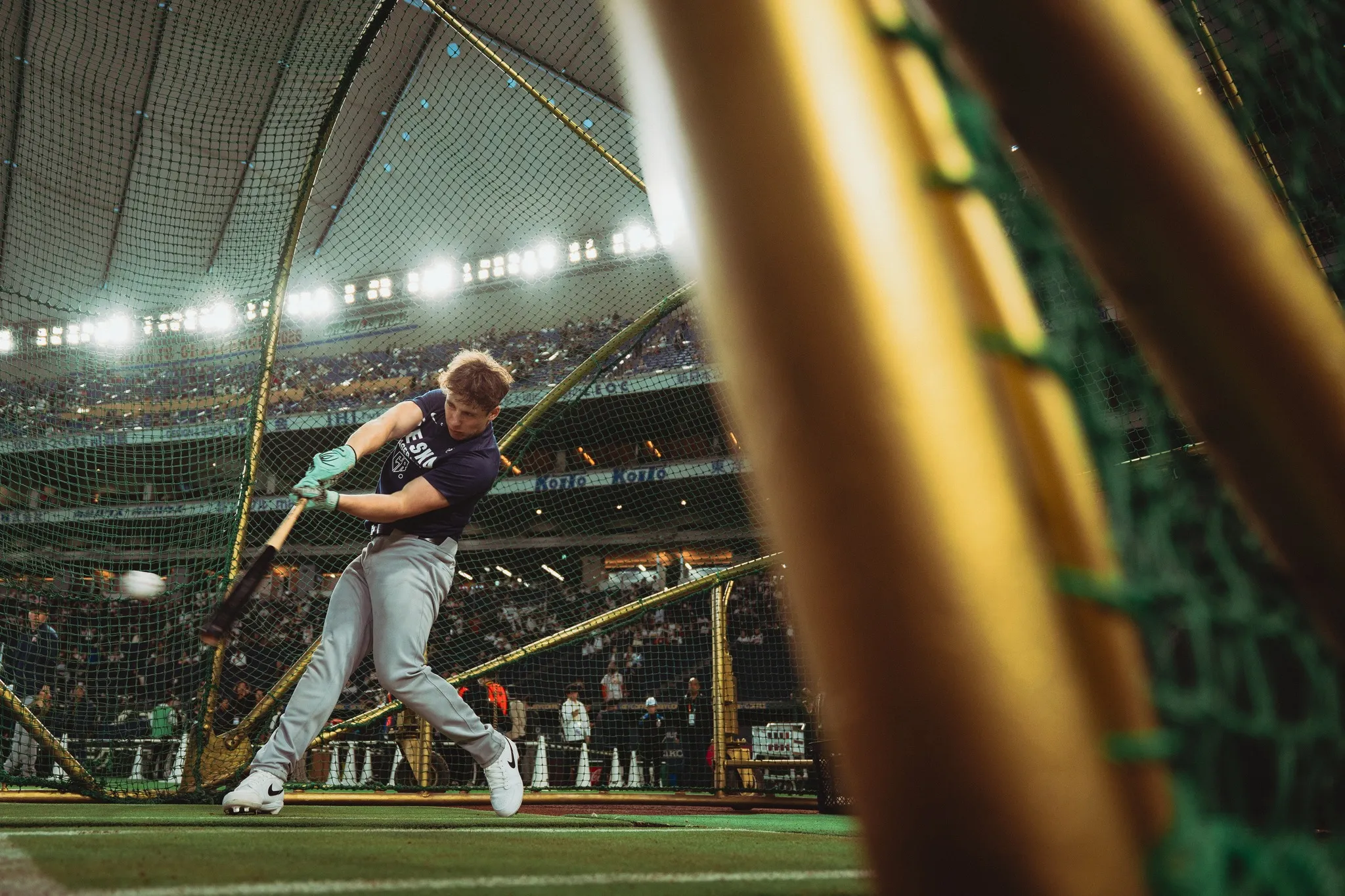
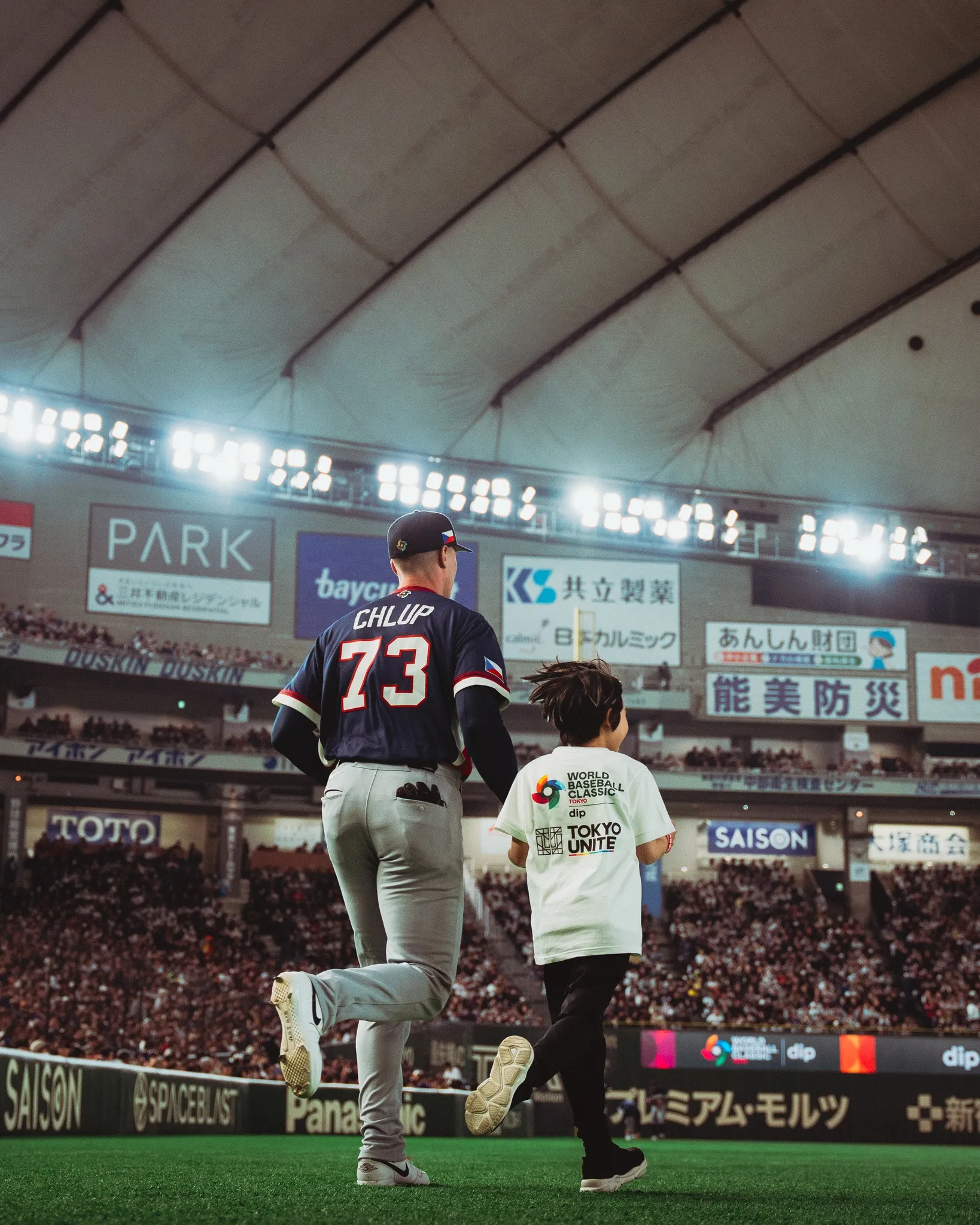
▾ The Czech Republic made their first appearance at the World Baseball Classic in 2023

First pitch: Soccer fans have long known how to cheer for both a club team and a national team, but that's relatively new for baseball fans. The response to our international coverage has been incredible, because there are people who have been following this space for a long time and weren't being served. It may not get the sheer volume of traffic a Yankees site gets, but the stories we've been able to tell have reached people who cared deeply and just needed somewhere to go.

A big part of what I love about international baseball is this sense of global community, and seeing the sport grow in unexpected places. Usually we're talking about Europe or South America for these early-developing nations. But then I got a DM one day which said, "Hey, do you want to hear about baseball in Bhutan?" And I went: yes, of course. This sounds incredible.

I always tell people: I don't know everything, I'm just lucky enough to ask the people who do. And this time, I didn't even have to find them. They found me.

Talking to Matthew DeSantis and just hearing the numbers from Bhutan was amazing: around 6,000 kids playing, in a country roughly the size of Boston, with a population of 700,000 people. They haven't reached every district yet. And here's the thing: they hadn't seen a professional game, they didn't have MLB TV. So their love of baseball isn't born from watching Shohei Ohtani hit home runs. It's born from the simple fact that when you put a bat and a ball in a kid's hands and get them playing, the game sells itself.

It's the same story with the Czech national team. So many of their players got started because someone handed them a glove one day, and they started throwing a ball around. Nobody told them there was a sport behind it, nobody told them there was a larger world waiting. They just loved throwing and catching. Then, as they got older, they realised: oh, there's more I can do here. You just have to get people there to get it going.

Mike Duncan, the podcaster and author, kept pushing me to write it. He happened to be having a casual conversation with people at the University of Nebraska Press, mentioned the idea, and they were interested. And that's really where it became a book. I'd never written one, never pitched one, so I don't know if I'd have arrived at it on my own.

There were certainly moments where I thought: what have I got myself into? If I write a bad article, it disappears in 24 hours and nobody notices. If I write a bad book, that book just hangs around like dirty laundry. So there was definitely more pressure there.

But I also had to become a different kind of writer. When you write online, even if you write longer than most people (probably longer than my editors would like!), you can still stretch when you want to. If you want to really live in a moment, you can. If you want to pull back and look at the bigger picture, you can. With the book I had to think differently. Normally I'm asking: how do I tell this story in 3,500 words? Here the question was: how do I tell this story in 70,000 words, and keep narrative flow, rising action, falling action, character development, and thrust all working together? It was very fun, and in some ways very scary.

I must have spoken to Pavel Chadim - the Czech team manager - for more than 12 hours over Zoom. I have to thank him for the number of days I interrupted his neurology work to talk to me for two hours at a time.

Clean laundry: I'd covered the Czech Republic extensively before the book. From the qualifiers, I pitched and helped develop a documentary. We went to Prague and Brno in the winter of 2023, before the World Baseball Classic. I visited the players' homes, their jobs, and had meals and drinks with them. That’s where the seed was planted. That was when I understood: oh, there's a firefighter on the team. The manager is a neurologist. That was when I truly grasped the dedication these guys had, the sacrifices they made for baseball, and just how close-knit they are. We always talk about sports teams as families, especially good ones. But these guys really are. They spend all their vacation time together, they've been playing together for decades.

Mike Duncan, the podcaster and author, kept pushing me to write it. He happened to be having a casual conversation with people at the University of Nebraska Press, mentioned the idea, and they were interested. And that's really where it became a book. I'd never written one, never pitched one, so I don't know if I'd have arrived at it on my own.

There were certainly moments where I thought: what have I got myself into? If I write a bad article, it disappears in 24 hours and nobody notices. If I write a bad book, that book just hangs around like dirty laundry. So there was definitely more pressure there.

But I also had to become a different kind of writer. When you write online, even if you write longer than most people (probably longer than my editors would like!), you can still stretch when you want to. If you want to really live in a moment, you can. If you want to pull back and look at the bigger picture, you can. With the book I had to think differently. Normally I'm asking: how do I tell this story in 3,500 words? Here the question was: how do I tell this story in 70,000 words, and keep narrative flow, rising action, falling action, character development, and thrust all working together? It was very fun, and in some ways very scary.

I must have spoken to Pavel Chadim - the Czech team manager - for more than 12 hours over Zoom. I have to thank him for the number of days I interrupted his neurology work to talk to me for two hours at a time.

The long game: There are two things you absolutely need to build baseball in a new country. One is infrastructure and support. The other is patience. This is a very long game.

The Czech Republic has been building for about 25 years - since around the year 2000 - and they still don't have a single player in the history of Major League Baseball. There's a lot that doesn't get talked about: a lot of losing, a lot of being blown out by teams that are years ahead of you while you're trying to catch up. We highlight the big wins, the great moments, and rightly so. But the road is long.

But the Czech won a bronze medal at the European Baseball Championship in September 2025. That was the first medal the country has ever won at a major international tournament. They've gone from a team people didn't take seriously to a team nobody takes for granted. And through partnerships with Japan and Korea, the next generation of Czech players have more doors open to them than ever before. We’ll see the real impact in ten or fifteen years, when the kids who are choosing baseball as their first sport right now come of age.

What I find beautiful is that some of the first kids Matthew DeSantis taught baseball to in Bhutan ten years ago are now becoming coaches. That expertise is going to compound. Baseball being back on the Olympic docket helps enormously, it unlocks government funding that simply isn't available otherwise, and it brings attention. But you need a lot of patience. Bhutan perhaps has another 15 years of work ahead just to reach where the Czechs are now.

I am always extremely bullish on baseball's growth around the world.

▾ Michael Clair first covered the Czech Republic team in 2022. Four years later, he's written a book about their unlikely journey

Underdog charm: At the 2026 World Baseball Classic, Ondřej Satoria was even better than he was in 2023 [when he struck out Japanese LA Dodgers star Shohei Ohtani], holding Japan scoreless until the eighth. And even though Ohtani didn't play that day, Japan had MLB players throughout the lineup. There was the story of Nicaragua, who came a couple of outs away from knocking off the Netherlands.

And then there's the 17-year-old from Brazil, Joseph Contreras (son of José Contreras), getting Aaron Judge to ground out into a double play with the bases loaded. Venezuela won it, and they deserved every moment. They're a baseball powerhouse - behind only the Dominican Republic for third place in MLB players by country of origin - and the emotion around that team was something else entirely. 

When they beat Japan to reach the semi-final, manager Omar López said: "My country is celebrating tonight. And 20 years from now, this is what I'm going to remember, that I made my country happy for one day. If we win again, my country can celebrate for two days. If we win again, they can celebrate for a week." And they did. We saw the parade. We saw the celebration.

And don’t forget Italy who beat the USA and made the cover of sports newspapers. Politicians were talking about baseball. The whole tournament just keeps getting bigger. I read it took six editions before the FIFA World Cup really became the World Cup. Well, we've just had our sixth World Baseball Classic. Maybe we're exactly where we're supposed to be.

Sports are community. Sports are stories. And these are the stories that make a sports fan fall a little deeper in love.

Arm’s length: I consider so many of the people I've covered friends at this point, which is a problem. As a journalist, you're supposed to keep a distance. I failed at that. When I was covering a tournament I'd tell the Czech players: hey, when I'm up in the press box, I'm not rooting for anybody. There are just as many great stories on the other team. But still…

I'm very nervous about them reading the book. I hope they see it for what it is: not a novelty, but a story about devotion. It's not just "a firefighter who happens to be good at baseball." It's a firefighter who has dedicated himself to reaching a professional level, who just happens to live in a country where he cannot be a professional in this sport. That's what I wanted to capture.

I'll be at Haarlem Honkbal Week in the Netherlands this summer. I'll also be in Prague. And there's a small chance I might drop into London for a day or two. At the very least, there'll be a one-man caravan carting a box of books. The story is never finished. The more I cover this, the more I uncover. Writing about baseball at all - the thing I loved at seven years old - that's the thing I get to call my job. Which is just extraordinarily lucky.

Michael Clair's book We Sacrifice Everything to Baseball is available now