Shred the Patriarchy

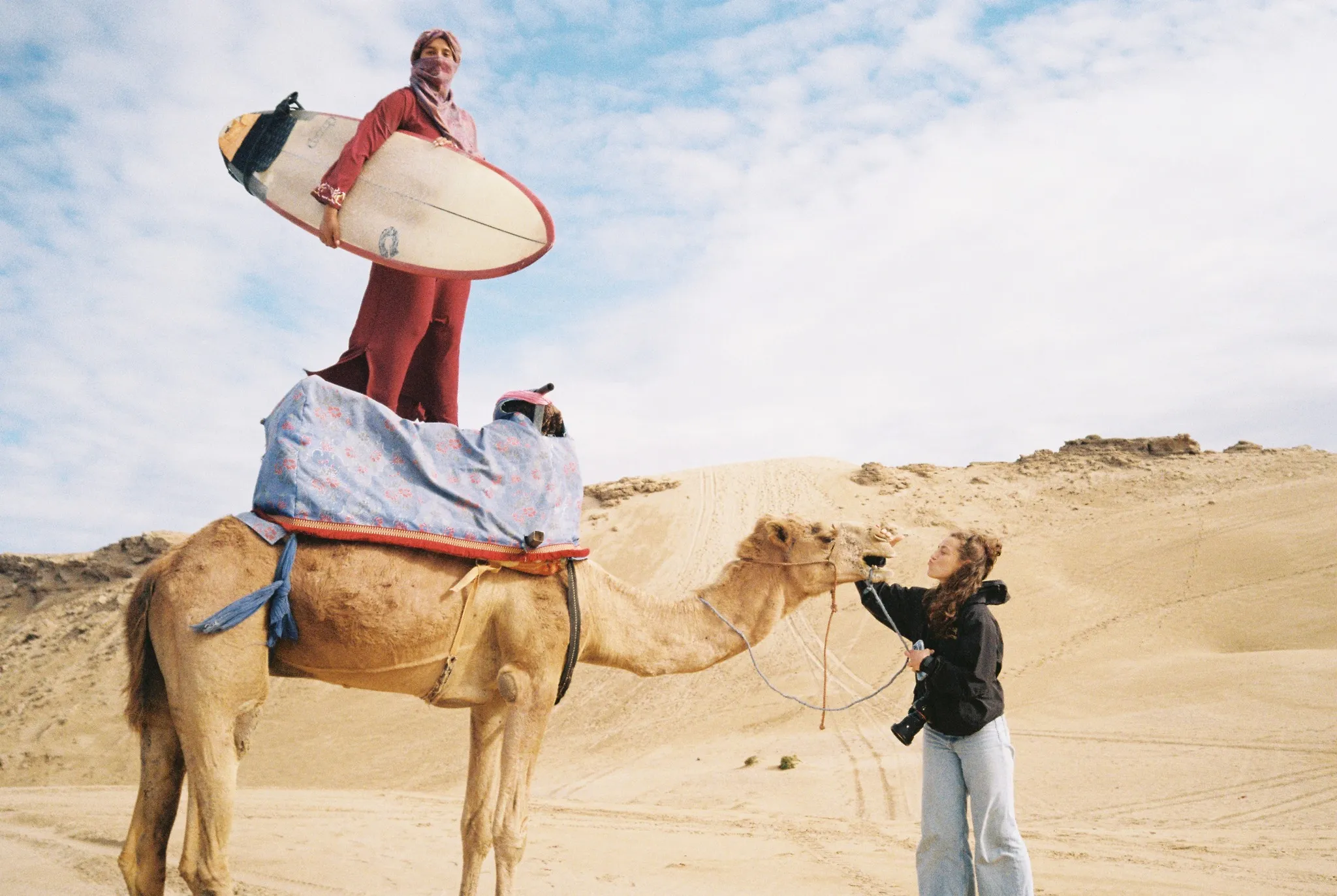
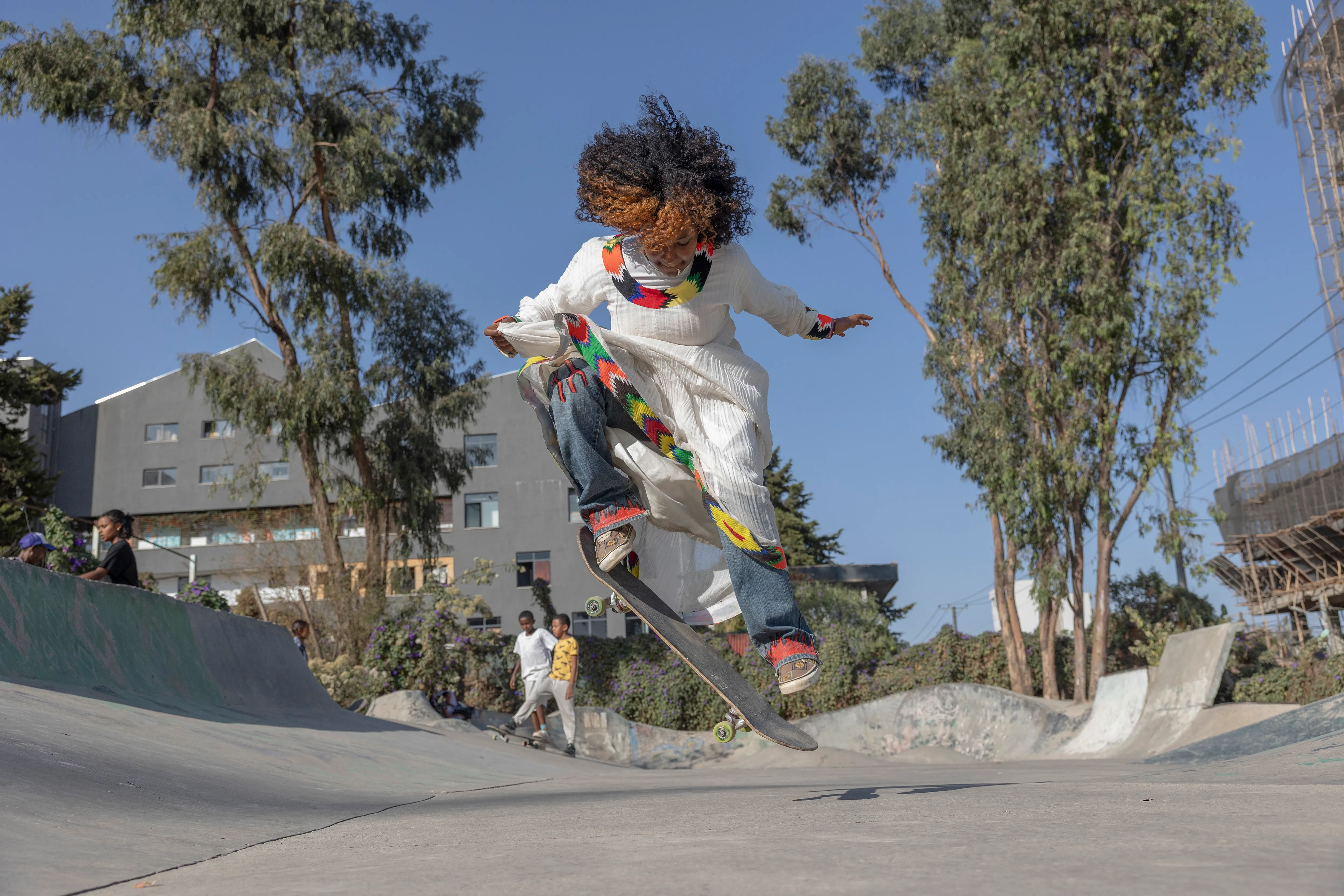
In India, a handful of women are transforming skateboarding into a form of resistance against longstanding prejudices and threats. In Ethiopia, girls are using their boards as a tool for self-determination following years of conflict. In Morocco, women are fighting for their rightful place in an equestrian tradition that has been denied to them for centuries. Chantal Pinzi, an Italian documentary photographer based in Berlin, has spent the last six years walking into these spaces armed with a camera. To observe, but also to resist. Her work focuses on resilience in marginalised communities, told through the voices of women.

Acts of resistance: I'm originally from Italy, but I moved to Berlin to study photography six years ago and I've been based here ever since. In the beginning I also had a side job to maintain because it's not easy [earning from] documentary photography and photojournalism.

I focus on telling the stories of resilience, of community, through the voices of women. I'm an athlete myself, - a kickboxer, and also a skater - so it was easy for me to relate to the topic of Shred the Patriarchy, my first longterm project, my baby. I’ve been a political activist for many years, but that project helped me to understand that I can use photography as a weapon.

I use photography to make louder the voices of people not heard. I could see that sport is a small ecosystem that reflects a bigger pattern of injustice. I could see through certain sports how to speak about gender injustice. I select sports that women are not allowed to do in certain societies. I don't consider myself a sports photographer, I'm more interested in those sports where women, by taking part, are making a political statement. It's an act of resistance.

Here in Europe it's a bit different, but still you have fewer opportunities. Kickboxing is a pretty new sport for women, so just stepping into the gym and being the only woman on the mat is something. I'm very lucky that here in Berlin I have a good female team. But move to another side of the city and you might be the only one practising the sport. That creates limitations. When there are no others in your weight class, you don't progress.

I also teach self-defence in some house projects here in Berlin. There are a lot of autonomous social centres that create political spaces, and I can teach self-defence to other activists and women. I'm only a blue belt, but I can still teach. History has always been told by men, and now it's time for a switch: told through the lens of a woman and through the voices of women.
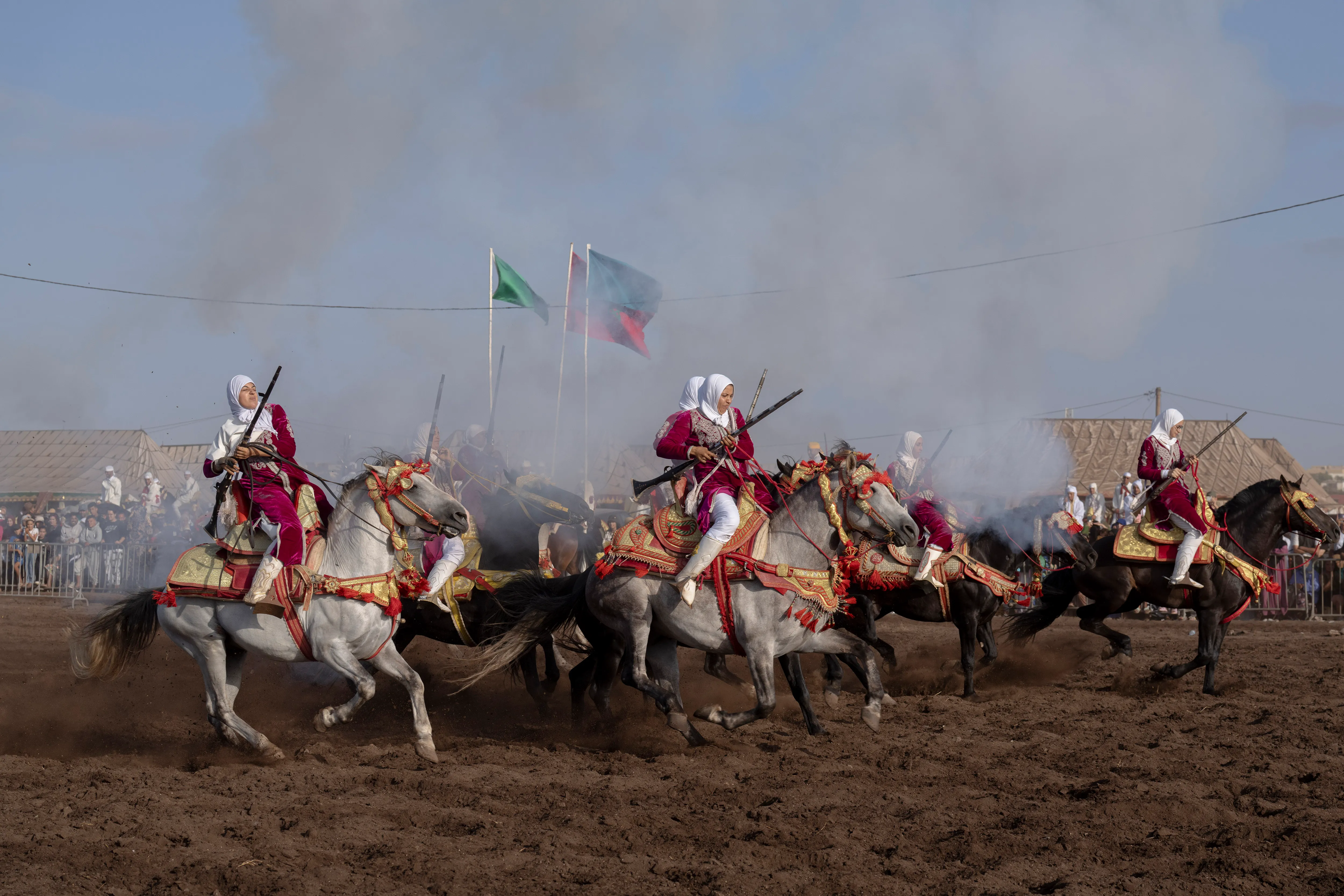
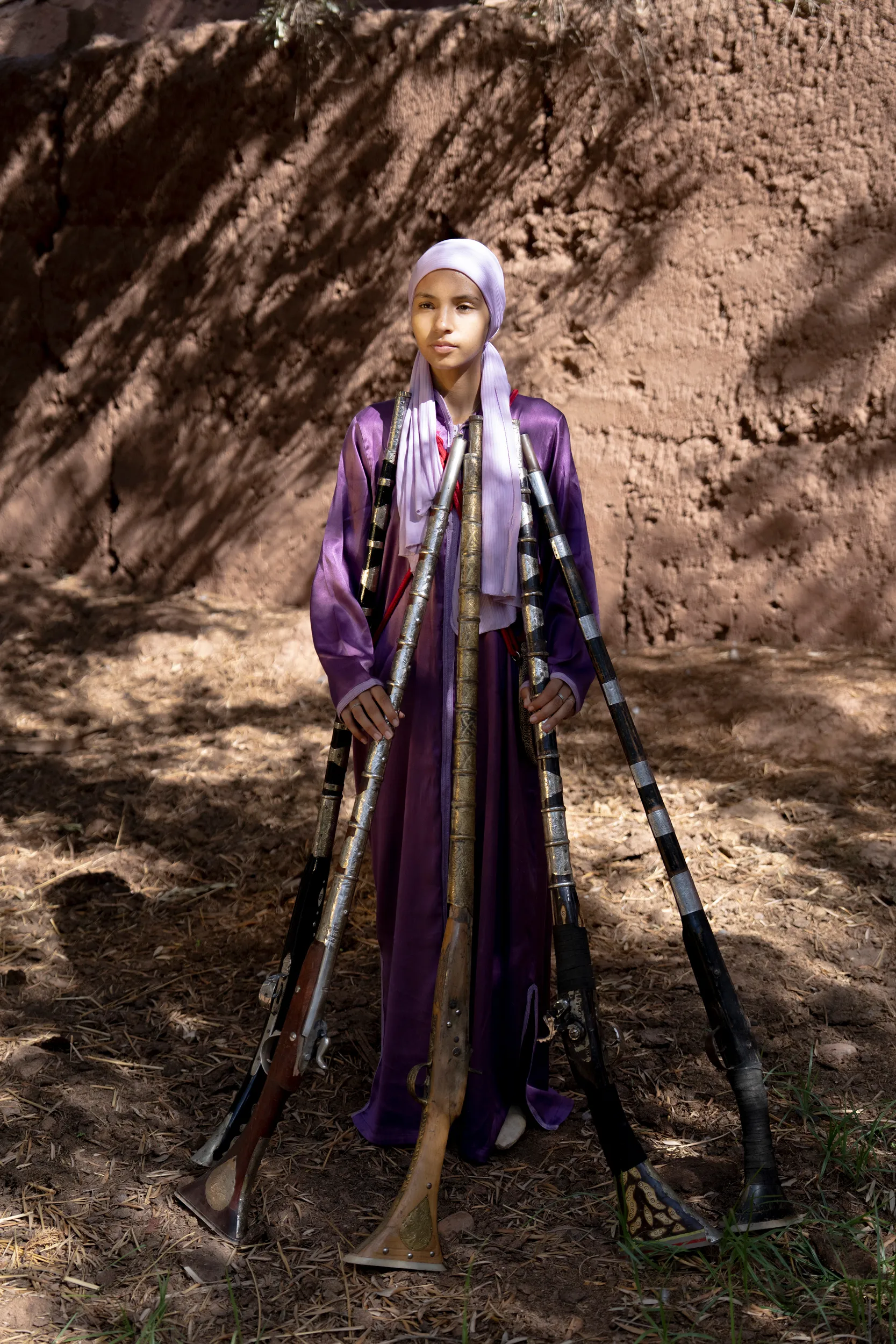
“women in Morocco weren't allowed to ride horses, making it unthinkable to lead a troupe in Tbourida"
▾ Tbourida is a Moroccan equestrian performance that simulates war techniques. For centuries the preserve of men, in recent years women have challenged this exclusivity

Sport as empowerment: There is a strong sense of empowerment in sport, mentally and physically. Athletes have a physical memory of being uncomfortable and not giving up. In skateboarding, you fall a lot. But you stand up, try to push on as much as you can until you get the trick. And that memory is a resource.

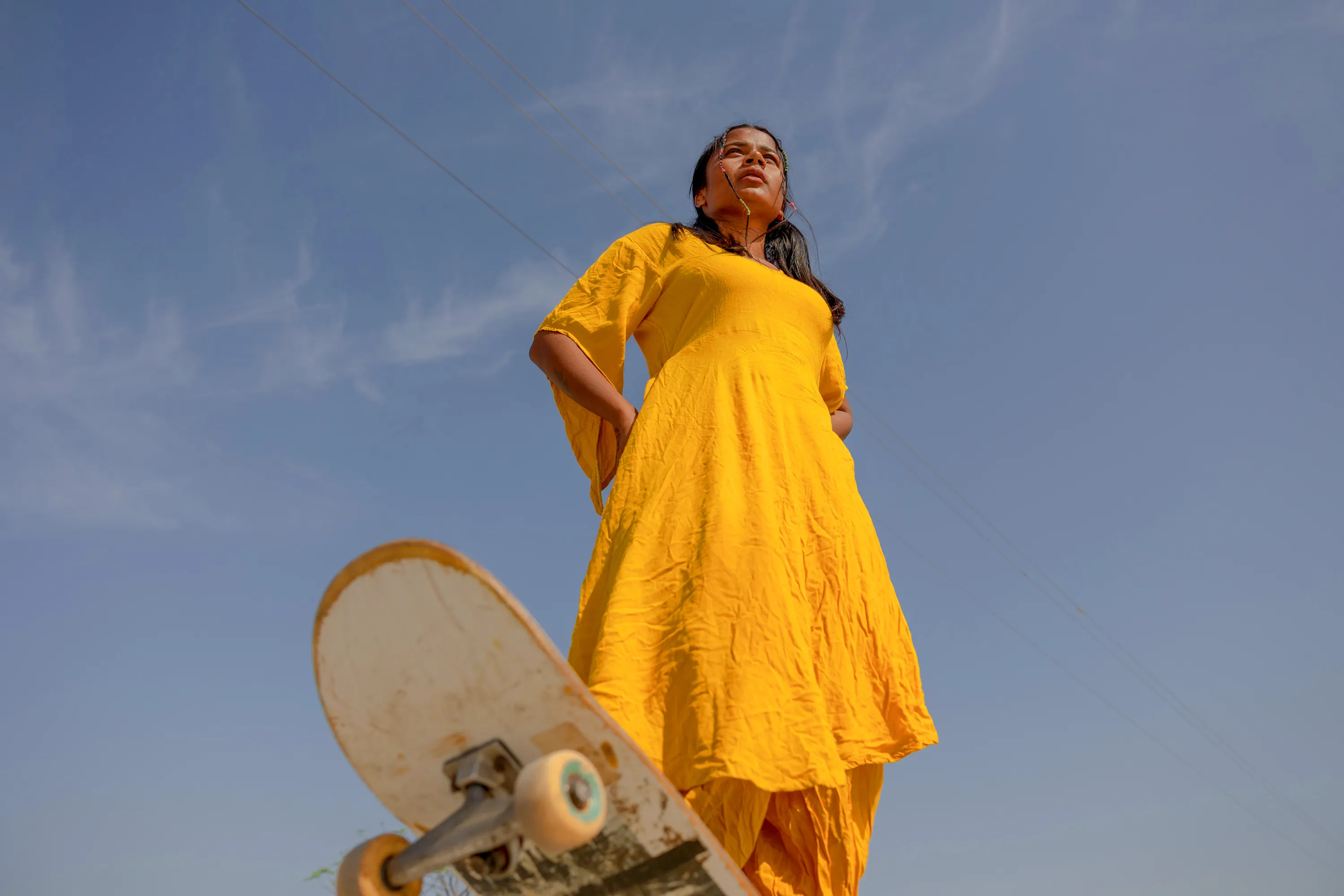
I can see future leaders of society through women practising sports. In India, for example, I was in the middle of nowhere with Adivasi women who belong to a tribe that is considered lower caste and are discriminated against. The villagers teach the women not to look men in the eyes, or not to look a foreigner in the eyes. But thanks to skateboarding, there were women that were very empowered. They stand differently in their society. They have the courage to be what they want. That was at least in part because of that resilience in sport, to push on despite everyone wanting you to stop.

I have a personal interest in skateboarding. I'm with skaters all the time, my friends are skaters, I grew up within that subculture. So when I was travelling in Morocco I started checking out skate parks, and I could see how limited female participation was. It’s not only in Morocco, but in Europe and other places too. It's changing, but it's a process.

In my 2024 project Fighting Back, the stories in India came from following the protests of Olympic athletes who were in the street protesting against the head of their federation because they had been abused – physically and mentally – and they were demanding change. In India the protests are peaceful and very long. I wanted to go and meet them and understand the reality inside the gym.

Sometimes harmful behaviours are absorbed as part of a training culture and treated as normal, such as trainers slapping athletes because they’re not doing enough repetitions. But I could also understand that, in the absence of real alternatives, these women use sport as a strategy of emancipation. It is about freedom within constraints, not the absence of freedom.

It was either: you become an athlete and a champion, or your family will arrange your marriage. Despite the harshness of the social context, these women choose to keep fighting and try to become champions in order to achieve economic independence and gain greater freedom.

Trust over access: I'm a young woman and I found it easy to create connections with these women. I was a guest in many of their family homes. They were opening up their homes for me because they wanted to speak up and share their stories. Sometimes the girls are not accepted by their fathers or their families because they want to be skaters, only because they want to spend so much time in public spaces, mixing with guys.

The people from the place you are photographing are the ones who protect you and guide you, advise you where to go and what to do. When I was in Colombia covering my stories, there were people following us. But I don't consider that dangerous. Dangerous for me is more like if you are a Ukrainian journalist trying to cover stories in Russia. I travel to places that are different, where there are problems, but I try to protect myself by following the advice of the women I photograph.

There is the story of Asha, from Janwaar, a rural village in the middle of India where an activist from Germany built a skate park, and from that a revolution began in the society of the village. The villagers were not happy seeing women playing with a board and starting to dress in Western clothes.

Asha was one of the main characters of this story. She started to learn English and was the first villager to get a passport. She succeeded in going to China to compete. Then she woke up one day and found graffiti on the wall of the skate park saying that if she continued, they would burn her alive. That's quite something for a very young woman who just wants to pursue a dream.

In Morocco, a lot of the time they were shouting, “go back home”, “what are you doing here”, “you belong in the kitchen”. When I was in Ethiopia, someone shouted that the girls skating were the devil.

▾ Chantal Pinzi was named a winner of the 2026 World Press Photo contest

Shooting the invisible: I was doing a lot of research about Morocco and I saw there were a lot of festivals of Tbourida [traditional Moroccan equestrian performance]. I didn't know anything about it. And then I thought, “wait a moment, where are the women?” There were thousands and thousands of men but, for years, women in Morocco weren't allowed to ride horses, making it unthinkable to lead a troupe in Tbourida. Horses are considered sacred, and women are considered impure by some.

But Tbourida runs deep in Moroccan heritage, and women deserve to belong to that. So the women that dare to ride horses have to finance everything by themselves, and they have no possibility of earning money through competition. After reading about that, I tried to contact some of the farisat (horsewomen). They were happy to hear from me.

Today there are seven all-female sorbas (troupes) in Morocco. I followed them during some festivals and travelled all around Morocco to meet the different troupes. If you have the opportunity to go and experience a Tbourida festival, it's insane. You feel completely transported to another era. I connected a lot with the women there.

I would like to invest in these women who want to create the first festival of women-only Tbourida troupes. I want to go back and see how this might be possible. I found a non-profit organisation – not very active yet, but able to receive donations legally – and I would like to use it to support them.

Morocco is like home for me, I go every year. I have a special connection there. And with the different chapters of Shred the Patriarchy, some women contacted me after seeing the work. They are all Gen Z, so it's really easy to connect with them through social media. That's how the project keeps growing.

Killing your babies: Before I go anywhere, I study and research my projects extensively. You need documentary moments to unfold in front of you, but you also need to plan. I think that's what makes me feel more calm when I go, especially to new places. I always ask the protagonist where they feel most connected, when they feel most themselves. But I also want to have specific elements in the frame, because that gives the feeling of where we are without having to say it.

The portraits are always quite planned. If I know I have to take portraits that day, I scout the location beforehand if possible. Even if I only have 30 minutes, you learn to understand where you can get the shot with whatever possibilities you have. But sometimes it's just good luck. You walk around and find a gap where they can jump, a wall where they can just sit.

I was always visually too close in the beginning. I use a 50mm lens. If I need to be close, I move with my legs. But sometimes, during protests, I’d miss the wider shot. I had a lot of portrait details, but then, what’s the whole scene? Just breathe out. That's something I learned.

I'm obsessed with light. I shoot mainly at certain hours of the day. When I shoot with skaters and we are going to attempt a trick in a particular space, I choose the light I want and usually they have to wake up very early. Many times it was just me alone, waiting and watching the light change. The scene shifts based on the light, the mood, the feeling you want to give, it's completely different. That's also how I build my stories: around the light.

The editing is very stressful. It's a lot of killing babies. You need to show only ten pictures for your project sometimes. You can miss an award with just one wrong selection. And sometimes you have to kill some of the best emotional moments you have, because another picture works better. You were there, you know the moment, but you have to let go.

With the Farisat project, my interest was more about the movement. I wanted to see how many women were involved, to see how different the struggle is for women living in rural areas versus the city. That was the concept. But then, of course, when you build the pitch around the main protagonists, you have to select the pictures of those people.

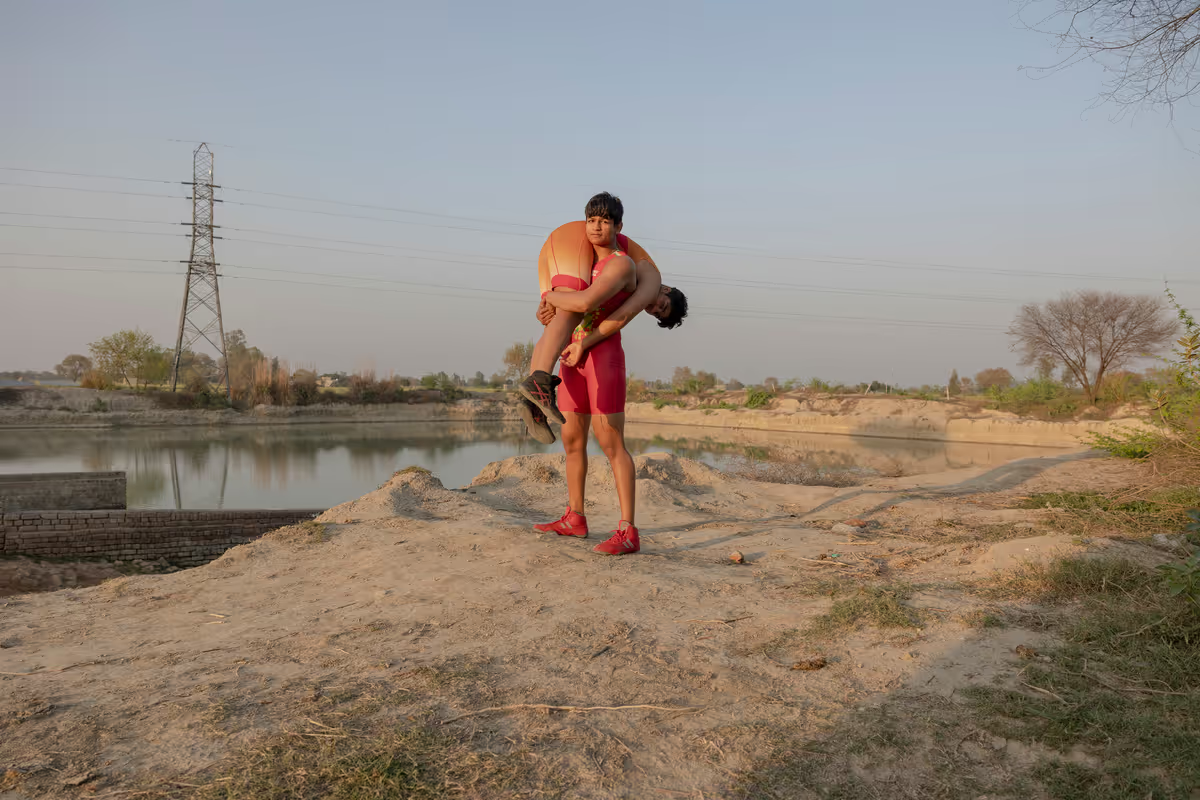
▾ Tannu Sharma, of the Altius Academy Wrestling School India, carries a teammate on her shoulders

Beyond the frame: From the beginning I've been self-funded. That's why I do it, it's my activism. I know I want to do it, so I go. In the beginning I was working in a bar over the summer, earning enough money to travel and do my first stories, including in Colombia, without any protection. Unfortunately that's the situation for so many freelancers, and I'm very angry about it because it's just insane. Something so important as providing freedom of information, yet it's so difficult to live from it, to have a family and a normal life.

Even winning awards doesn't change things so much. You win awards, you become well known in the industry, yet still some try to take your work for free. But my personal projects, I do them because I want to. Maybe it works, maybe it doesn’t. I don't regret it.

Some of the women I've photographed have gained more attention, and sometimes I become the link between them and organisations. I try to get people connected. In Morocco and in Ethiopia it was possible for me to help further. I’d sent requests to skate sponsors to receive boards and equipment, and we did that for two or three years, as well as organising workshops for kids and women. We built a mini ramp in Morocco. I sent materials to Ethiopia.

Recently I won the 2026 World Press Photo award. It's crazy. I've been trying every year since the beginning of university. One of the things I learned from my professor was to apply every time, every year. I did with Shred the Patriarchy, every year a new chapter. But finally this time, it worked [for Farisat: Gunpowder’s Daughters].

I still don't have a book, and it might be time. I want to go back to Morocco. And personally, I want to compete in the Muay Thai World Cup in Thailand as an athlete. The project is never finished.

Chantal Pinzi is an Italian documentary photographer based in Berlin. chantalpinzi.com