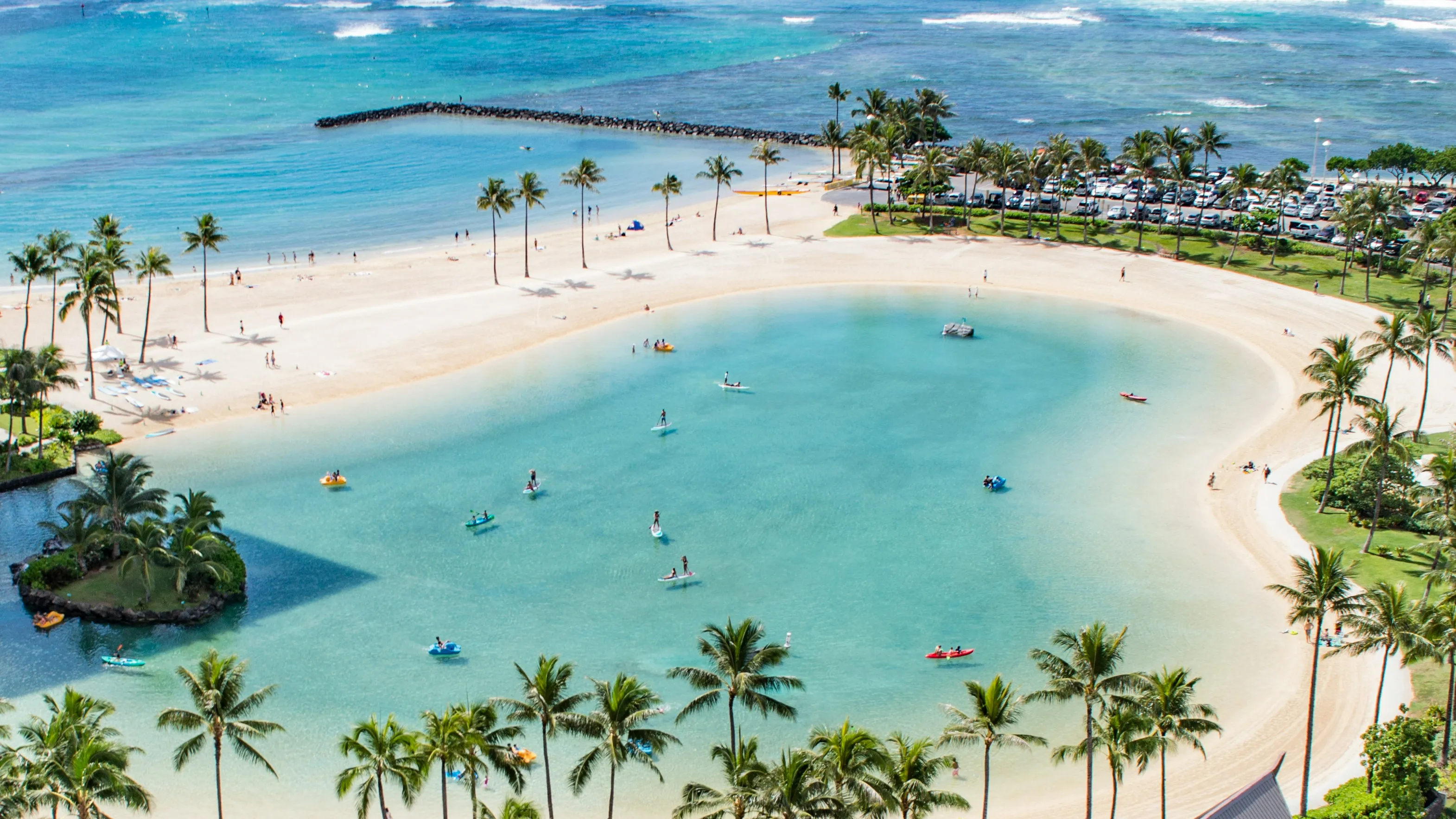
Surrounded by swaying green palm trees and located on the very southern tip of Honolulu, the Outrigger Canoe Club on Waikiki Beach is considered the birthplace of beach volleyball. The story goes that, back in 1915, as a way for Hawaii’s surfers to pass the time when the waves were too flat, swim coach George “Dad” Centre mounted a volleyball net on the sand between the surfboard lockers and the canoe shed. With surfers able to play in their board shorts and barefoot, it proved the perfect distraction until the ocean proved a more willing participant.
Before long, the game was being played by families in California and eventually spread to Europe. Eighty-one years after being casually invented by a man who coached the USA swimming team at the 1920 Games in Antwerp, beach volleyball became an official Olympic sport, when it made its five-ring debut in Atlanta in 1996.
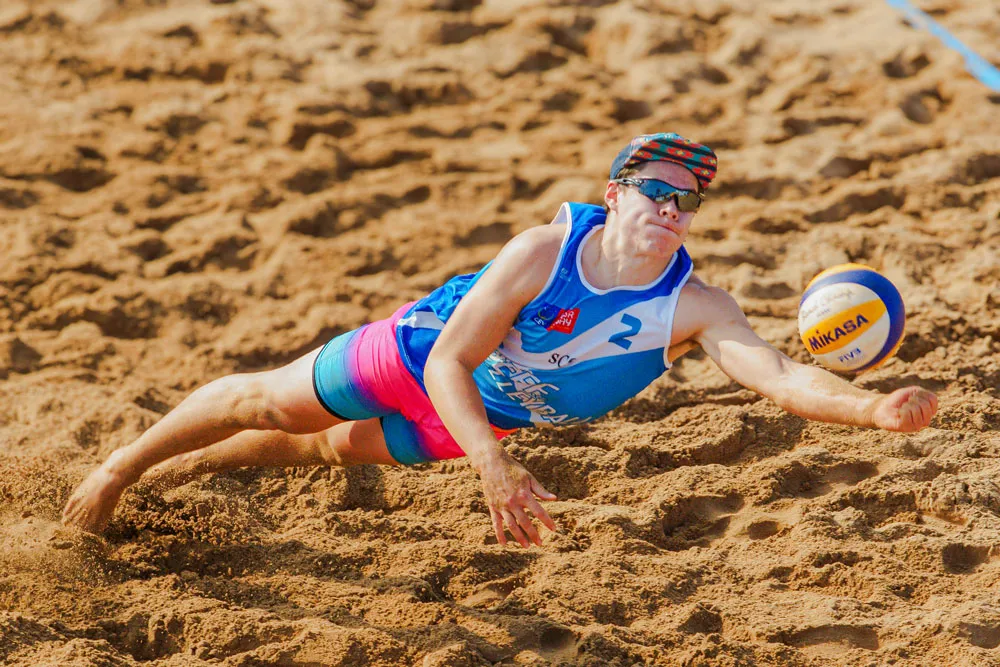
Despite its continued global growth, it is the country of its birth that remains beach volleyball’s most successful exponent, followed closely by Brazil. The duo’s dominance at the Olympics has ensured that the game continues to be synonymous with a backdrop of lapping ocean swells, scorching hot sand, partisan crowds of bobbing shades and baseball caps, and, of course, lithe athletes wearing very little.
But as beach volleyball makes its Commonwealth Games bow on Australia’s suitably glistening Gold Coast, the absence of the USA and Brazil allows the sun to shine on some of the less-decorated nations. Canada, despite not boasting much of a reputation as a sun trap, clearly makes good use of hundreds of miles of coastline with the top-ranked side in both the men’s and women’s draw. Hosts Australia not only have beaches in abundance but a gold medal to their name, when Natalie Cook and Kerri Pottharst channelled the rapturous home support to overcome Brazil at the Sydney Olympics in 2000. Then there’s the rare chance for the likes of New Zealand, Cyprus, Fiji, Trinidad and Tobago, Sri Lanka, Vanuatu and even Rwanda to make a name for themselves.
Oh, and Scotland.
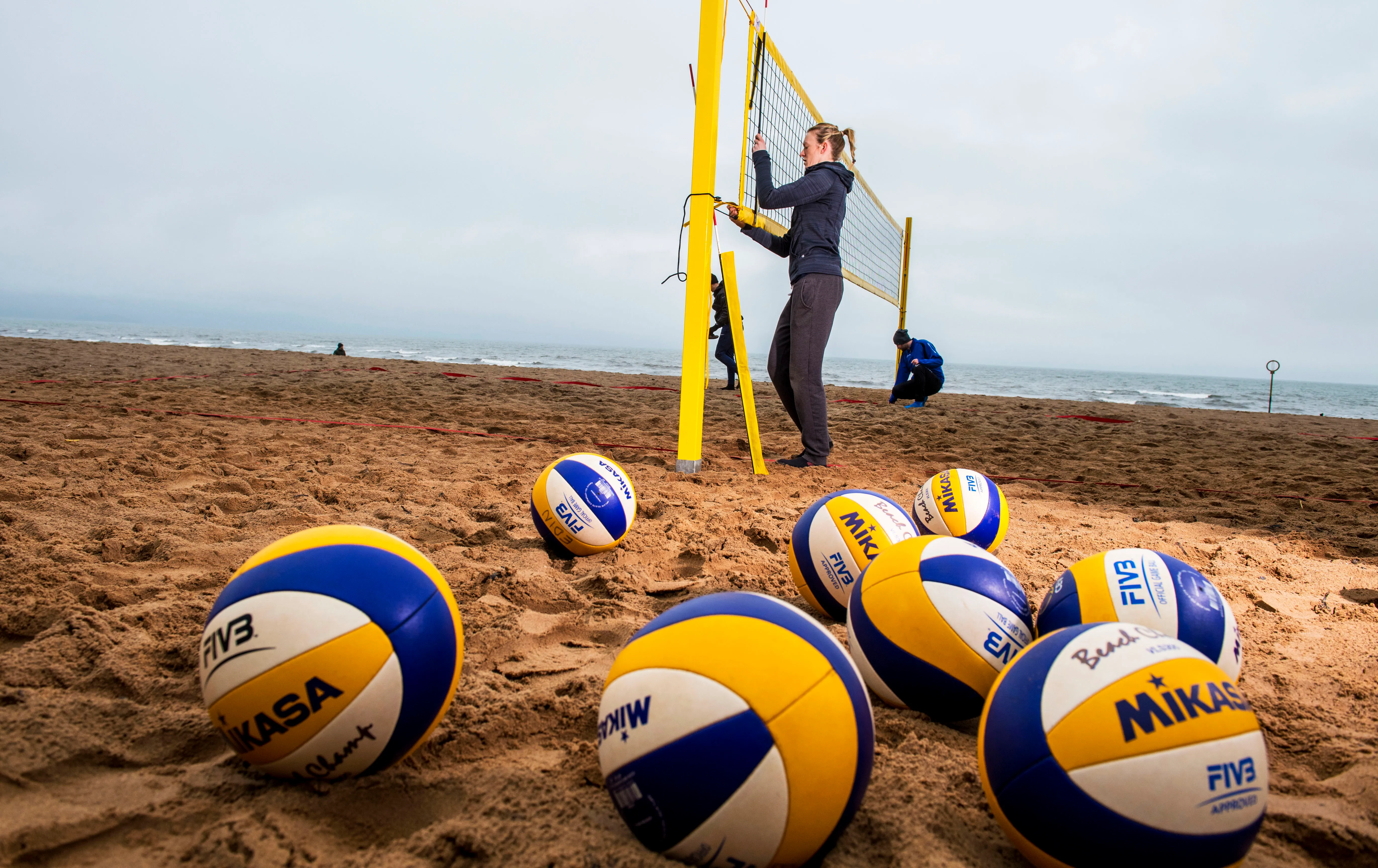
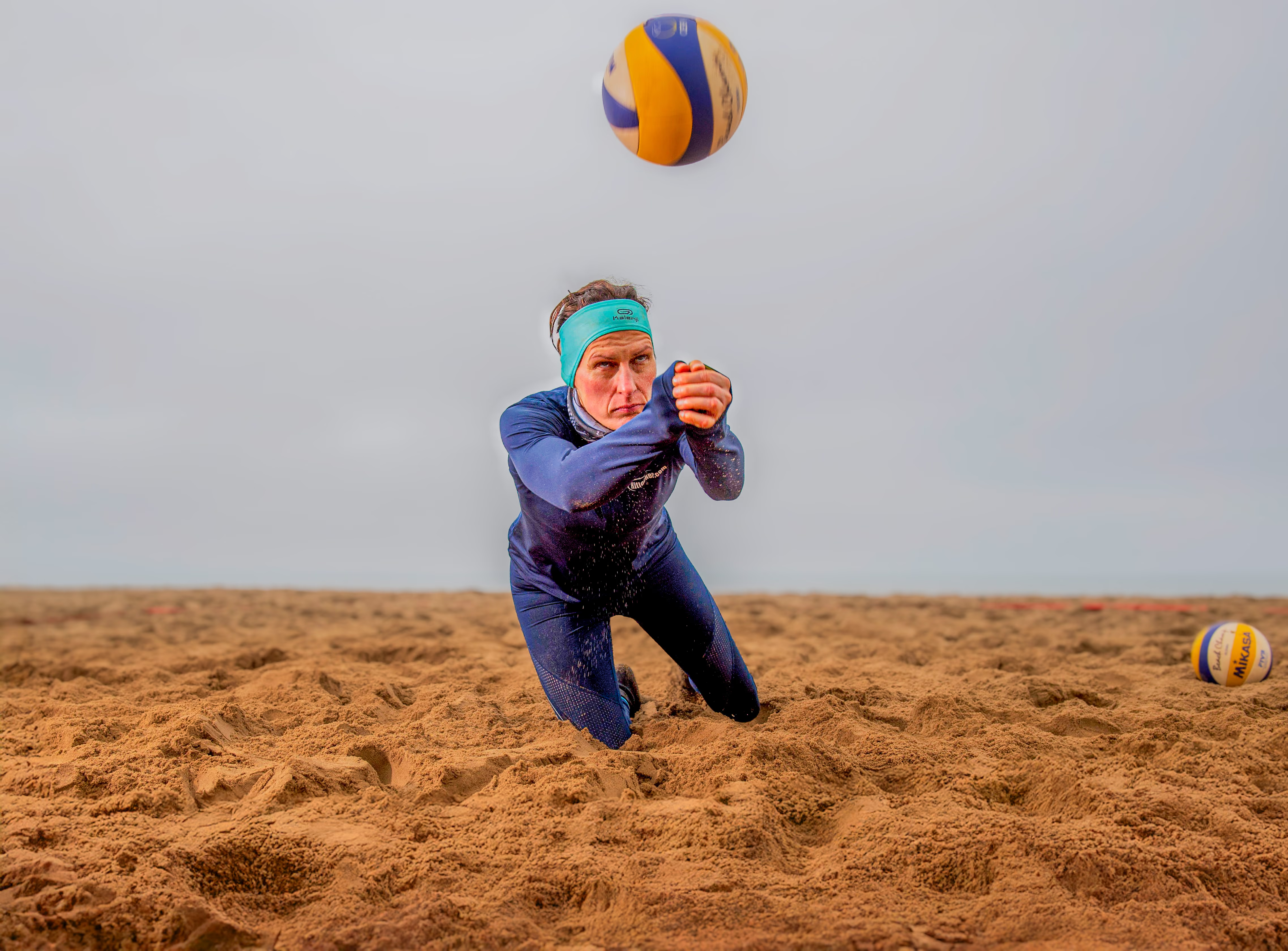
If beach volleyball’s holy trinity is sun, sea and sand, then Team Scotland are on a mission to prove that two out of three ain’t bad. The team’s main training base, Edinburgh’s Portobello Beach, is known for many things. In 1296, William Wallace gathered his troops here ahead of the Battle of Dunbar. In 1650, it was where Oliver Cromwell held a clandestine meeting with the Scots, while the 18th century saw it become a haunt for sailors and smugglers. In the 1950s, a pre-Hollywood Sean Connery even worked as a lifeguard at the open-air heated pool. But what the beach is not so renowned for is a sunny disposition.
It has meant that, for Scotland to be able to send its first ever men’s and women’s beach volleyball teams to the Commonwealth Games, the journey has been far from conventional. Whether juggling full-time jobs with gruelling training schedules, sacrificing time with young families in favour of churning out 18-hour days, self-funding travel to qualifying events or training in sub-zero temperatures, Scotland’s place at beach volleyball’s top table has been earned like no other in the sport: through grey days, gritted teeth, and thermals.