Ask a golf fan to name a Ryder Cup hero, and while dozens of greats from both sides of the Atlantic will be recited, it’s unlikely Jock Ballantine will be among them. His name will mean little to most. As the Ganton Golf Club pro, he never played in the Ryder Cup. But when American captain Ben Hogan objected to grooves in the British team’s clubs on the eve of the 1949 contest in Scarborough, flustered officials turned to Ballantine to resolve the issue. Without hesitation, he began filing the offending clubs down to conforming standards. Thanks to his all-nighter, the eighth Ryder Cup commenced without delay.
Similarly, the volunteers who joined forces with Celtic Manor ground staff in 2010 to do battle against the brutal Welsh elements remain nameless in the annals of Ryder Cup history. Yet, with squeegees and towels as their weapons of choice, their efforts over an unprecedented four days ensured that all matches were completed in full, a scenario that seemed unlikely when lashing October rain resulted in less than four hours of play on the opening Friday.
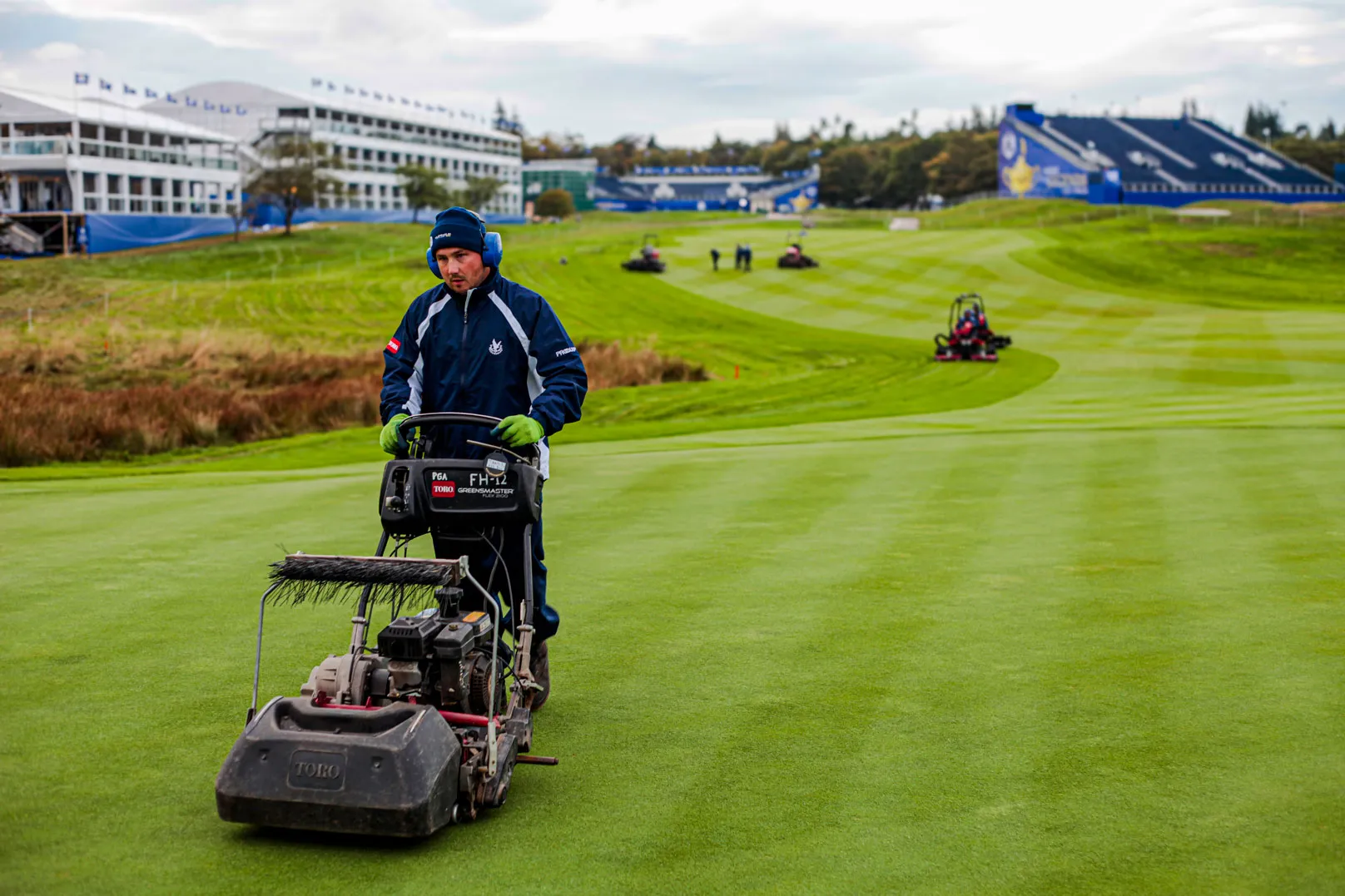
Throughout a history fast approaching 100 years, the Ryder Cup has relied on the diligence and dedication of those working in the shadows of its most famous venues. Today, with the competition having a legitimate claim as the world’s third most-watched sporting spectacle after the Olympics and the FIFA World Cup, that reliance has only increased.
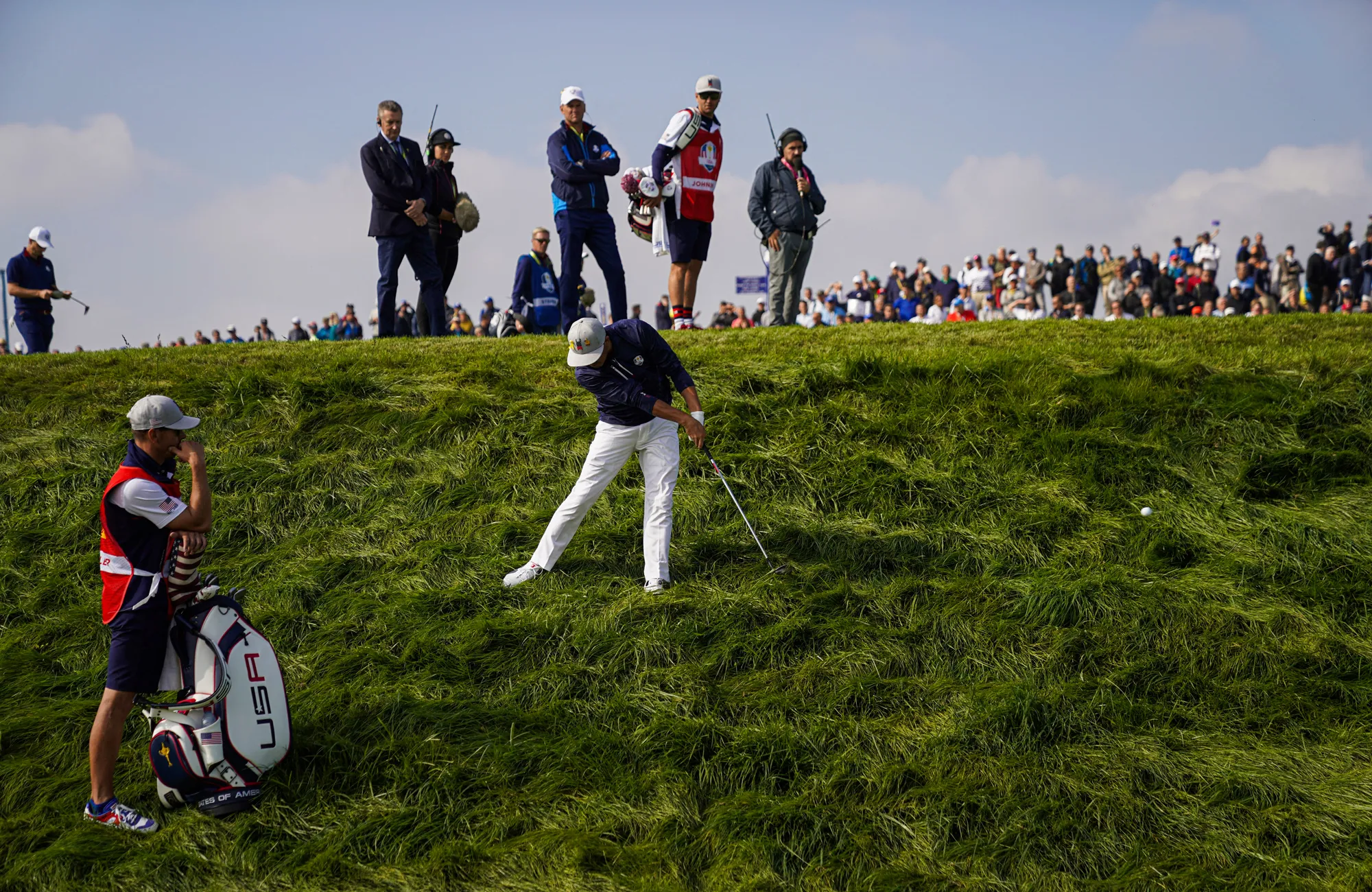
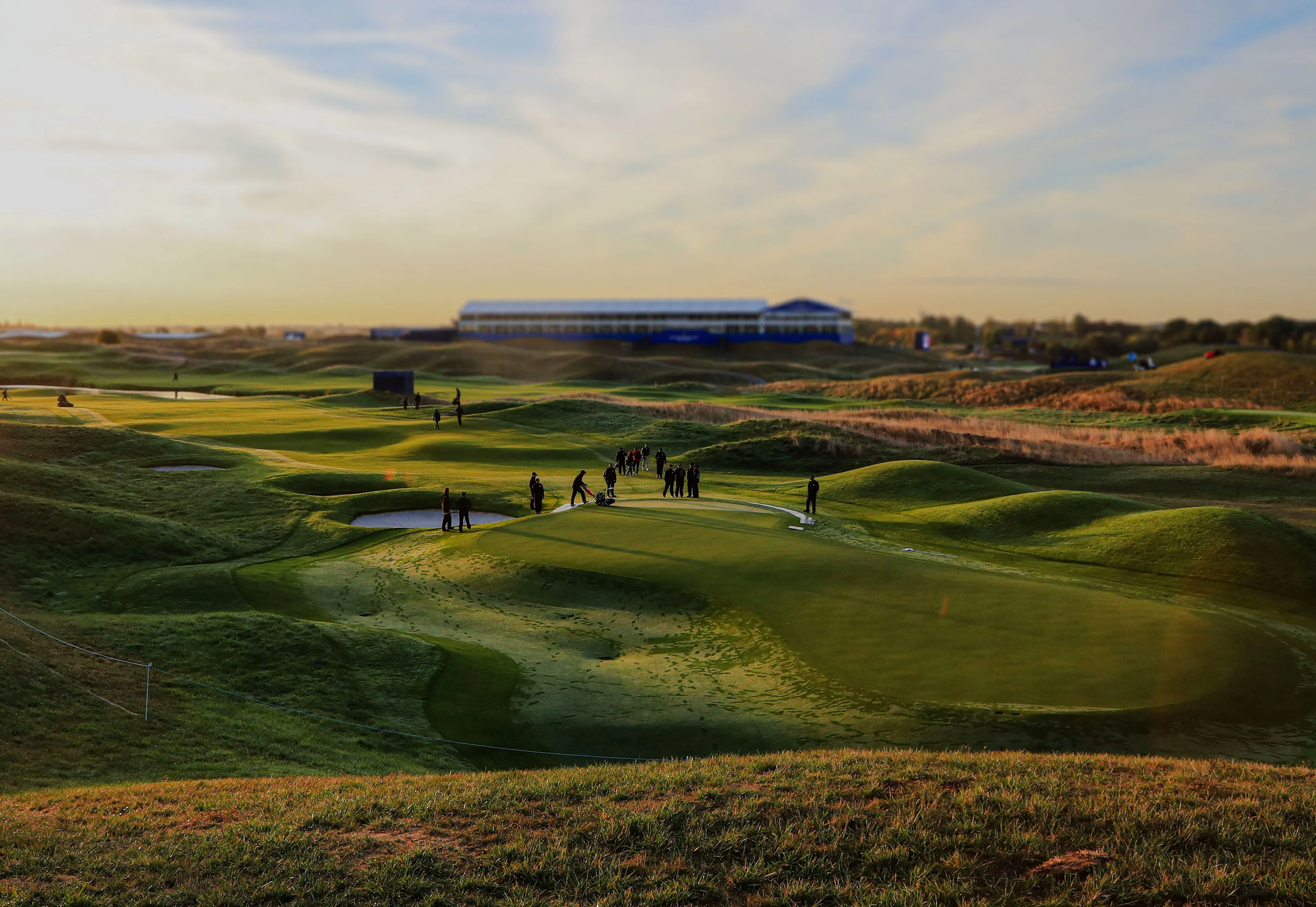
To the millions watching at home and the thousands in attendance, the Ryder Cup is but one long weekend of intense golfing drama. Yet to a select few permitted inside the ropes, it represents years laying the foundations on which golf’s greatest players can showcase their brilliance. Their decisions and actions in the months, weeks, and days preceding help shape the moments that become TV montages, history book chapters, and lifelong memories.
When Justin Rose drove left into the gorse off the 13th tee on the final day at Gleneagles in 2014, his subsequent recovery to within a foot of the pin became one of the defining moments of the tournament. His birdie meant he’d clawed back Hunter Mahan’s four-shot lead, removed another red from the scoreboard and, with Europe 10-6 ahead, further extinguished any faint American hopes of a recovery.
Two years after golf’s greatest comeback in Medinah, there would be no miracle in Perthshire. Rose smiled at the camera and quipped: “There’s a bit of Seve for you”. As the Scottish crowd cheered and the commentators gushed, one man had his own unique reason to feel particularly relieved. For that bush was not there by chance, but by design.
“In the spring of 2014, we were out looking around the course with [European captain] Paul McGinley,” remembers Steve Chappell, who was the course superintendent at Gleneagles for the 2014 Ryder Cup.
“We were clearing out all of the scrub under the pine trees about 300 yards off the tee on hole 13, a fairly long downhill par four. But there were a couple of bushes at the end of the trees that he wanted to leave in. He said if someone goes in there it’ll be hard to play out of, and it’s going to be hard for a European to hit into it. OK, that’s fine. Then, on the Sunday, Justin Rose drove into them.
“I was actually watching on the big monitors we had in the maintenance facility thinking ‘I bet someone’s cursing us for not taking those bushes out’. But it was a great second shot. He hit it stiff, it was a tremendous recovery.”
.webp)