ENTER THE GLADIATORS

The father of the modern pentathlon is Olympic founder Pierre de Coubertin, who proudly launched the event - inspired by the ancient Greeks and based on the skills a soldier needed to defend a fort - at the Stockholm Games in 1912. But a little over a century later, an ugly incident at the Tokyo Olympics saw the sport in disarray, its future at the Games a serious doubt. To save itself from extinction, its organisers have found inspiration from an unlikely source...

Annika Schleu was dreaming of Olympic gold when she sat astride the beast that would break her heart. As per the rules of modern pentathlon, she’d had just 20 minutes with her randomly allocated horse before attempting to guide him around a deserted showjumping course.

It was the 2021 Olympics in Tokyo, with its post-apocalyptic aesthetic of face masks, saliva swabs, and empty stadiums. Amid this destabilising environment, a tearful Schleu would soon realise that her horse’s name, Saint Boy, was one dripping in irony.

The modern pentathlon involves five events: fencing, swimming, show jumping, pistol shooting, and cross-country running. As the show jumping commenced, Schleu led the entire field. By the time it was over, not only was the German dead last, but her sport was staring into the abyss.

Saint Boy had no interest in completing any of the jumps. Wild-eyed and agitated, the horse’s frenzied demeanour was mirrored by his rider, who sobbed and thrashed her arms like a toddler being told the soft play’s closed. It was then that Schleu’s coach, Kim Raisner, decided to intervene. Reaching over the gate, she punched the horse on the backside. This violent act calmed neither horse nor athlete.
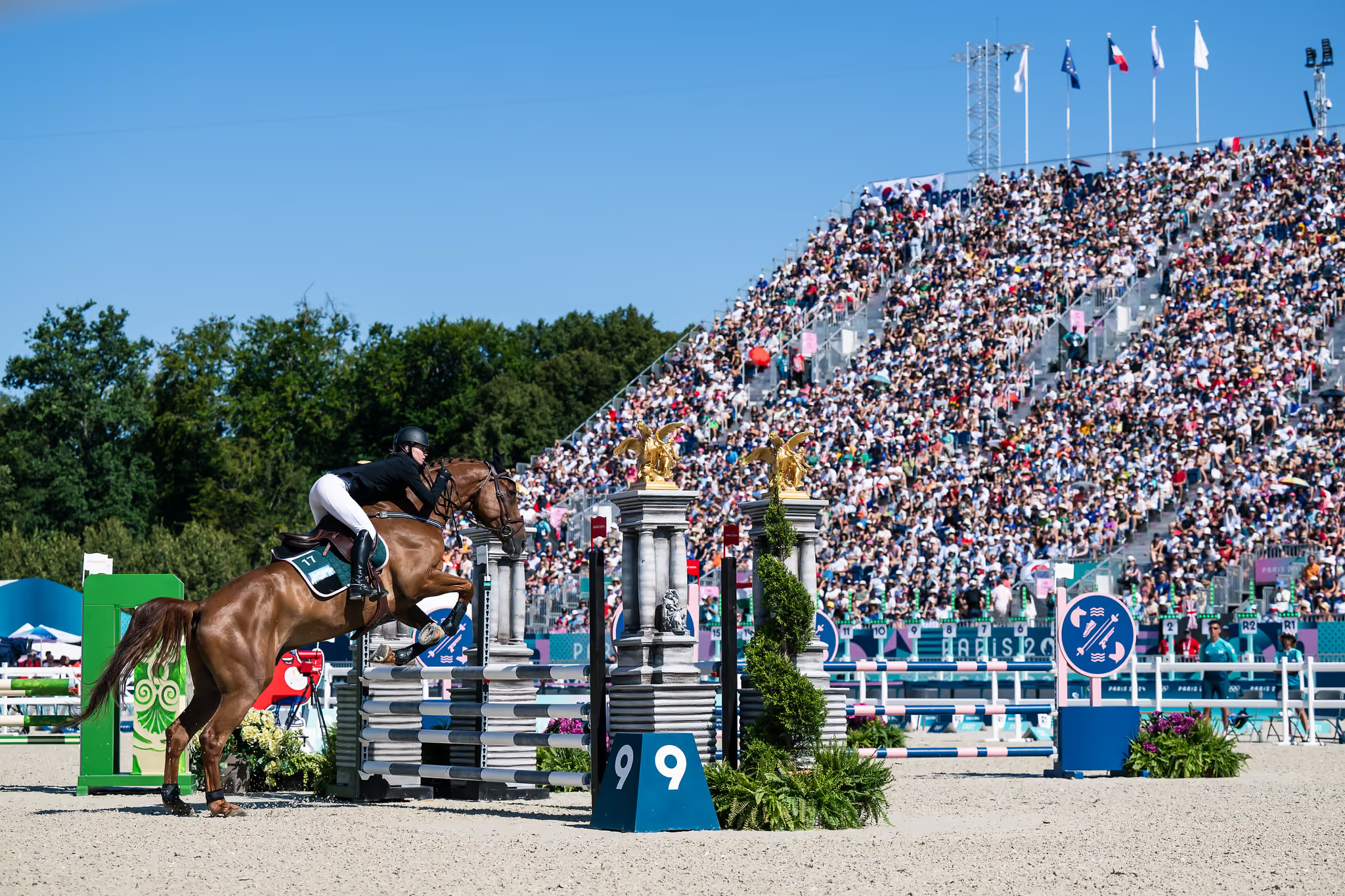
Before long, Schleu’s Olympic hopes were crushed, the IOC sent Raisner home in disgrace, and the whole sorry scene went viral. For a sport with the word “modern” in its name, there was nothing progressive about this display of animal cruelty and emotional vulgarity. The public viewed it with the sort of mystified revulsion reserved for bygone horrors like caning schoolchildren or trepanning.

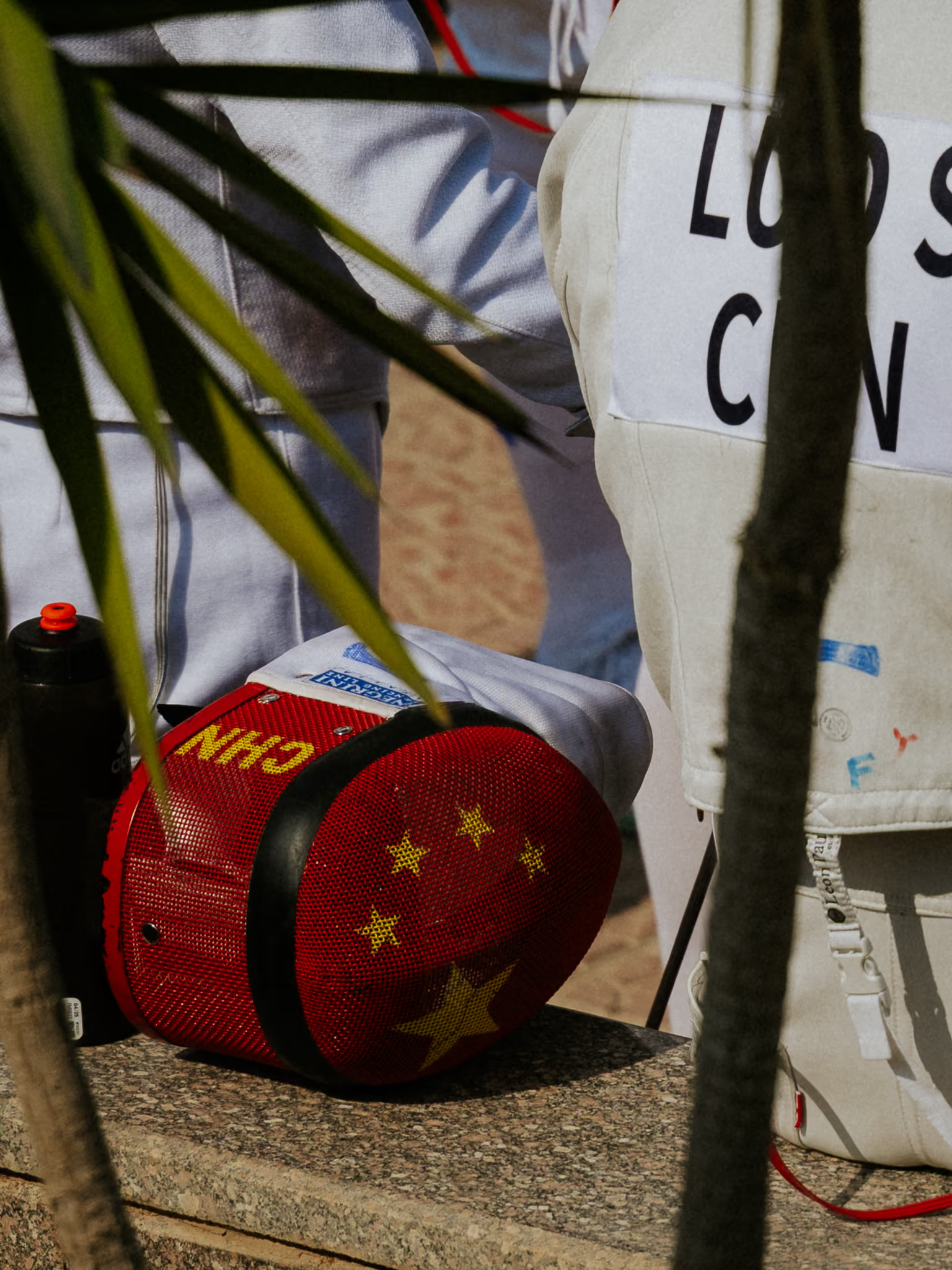
To understand the significance of what happened next, you need to know that the sport was devised by the founder of the modern Olympic Games, Pierre de Coubertin, in 1912. Inspired by the pentathlon of the ancient Games - based on the skills a soldier needed to defend his fort (wrestling, long jump, javelin, discus, and running) - the modern pentathlon simulated what a 19th-century cavalry soldier would need to fight behind enemy lines. Ride an unfamiliar horse, shoot his pistol, sword fight, swim through moats, and run for his life.

But despite it being invented by the Olympics for the Olympics, the IOC announced that modern pentathlon in its current guise could play no further part in any future Olympiad. It was expelling its first-born from the family home unless it promised to change its ways.

And so began a period of reflection for pentathlon’s governing body. But reinvention in sport is a perilous exercise. It pits the seething traditionalist against the promise of an intrigued newcomer. The temptation of the latter is often too much to resist.

It’s why boxing is happy to welcome the influencer circus, and why the nascent Baller League is confident of making a similar mark on football. It’s why Ashes Tests are now played with pink balls under floodlights. It’s why Athlos' long jump competition was set in Times Square, and why the NFL now has more kids playing flag football than its shoulder-padded original. It’s why the likes of golf, rugby, and even fencing are desperately devising new leagues and formats.

And so what did modern pentathlon do to rescue their sport from extinction? First, they learnt the lesson of red-faced Blue Peter presenters and decided never again to work with animals. Saint Boy could neigh a sigh of relief, for he and his fellow mounts were no longer under the gainful employment of the Union Internationale de Pentathlon Moderne (UIPM).

For their new fifth discipline, the UIPM wanted a sport that wasn’t already on show at the Olympic Games, discounting anything like cycling or climbing. They wanted it to be global, fun to watch on TV, easy to transport and, crucially, for it to abide by de Coubertin’s original military concept.

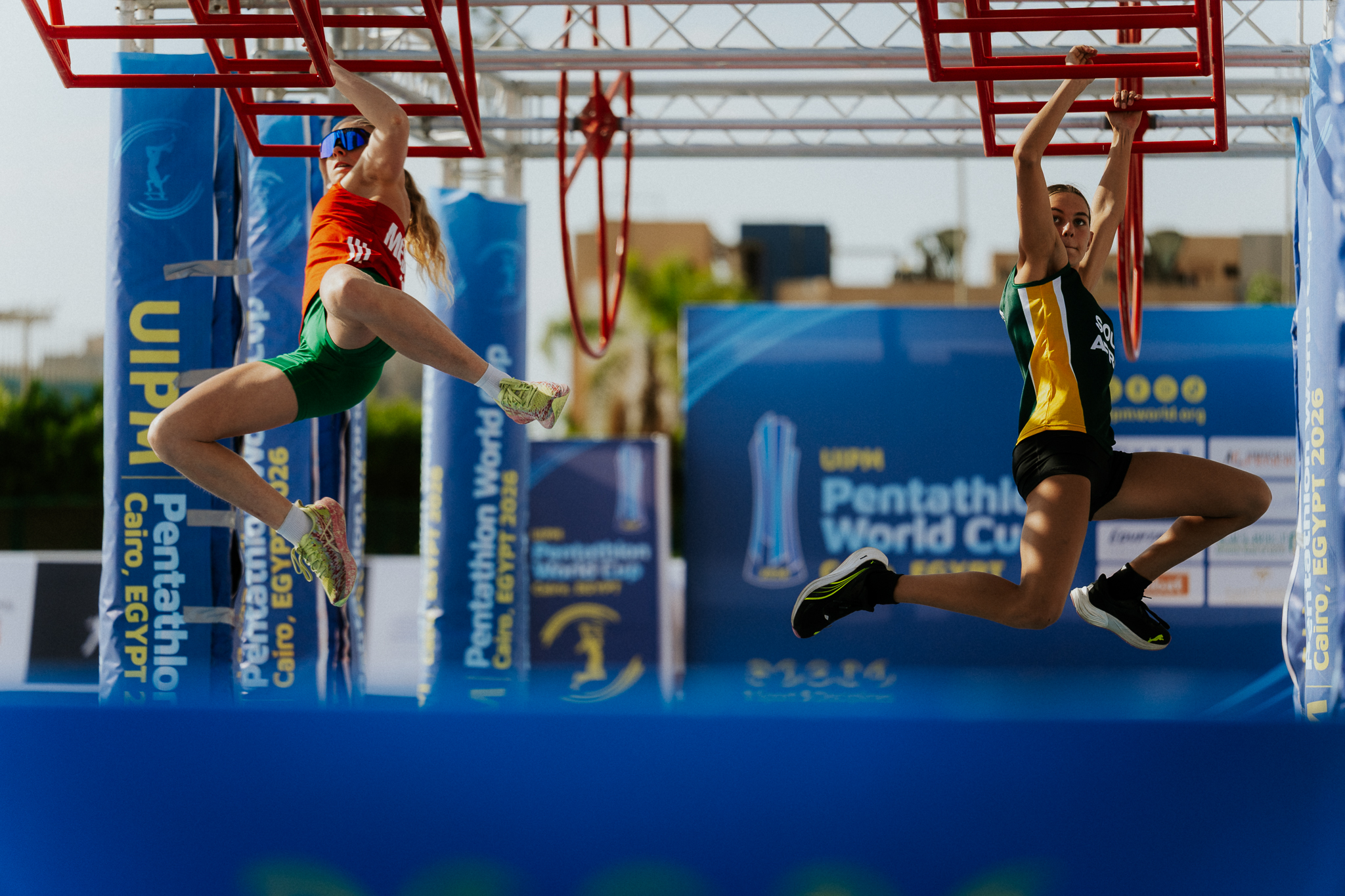
And so it was announced that show jumping would be replaced by … obstacle course racing (OCR). Having earned its small-screen stripes on everything from Ninja Warrior to Gladiators, OCR was about to go legit.

It was a move that caused a stink among pentathletes who, let’s not forget, had spent years honing the art of the equine trot. Now they were expected to drop the reins and grab swinging hoops with the giddy abandon of a mischievous chimp.

Former British modern pentathlete Kate Allenby, who won bronze in 2000, called the change a disaster, saying “it’s not modern pentathlon if it hasn’t got riding in it.” Joe Choong, the British gold medallist in Tokyo, threatened to quit the sport. But Greg Whyte, a silver medallist in 1994, seemed to understand the conundrum. “All sports evolve, and no sport is immune from change in the modern TV era,” he said.

Modern pentathlon’s new look was revealed at its 2025 World Championships in Lithuania. After one round of fencing, the athletes headed to an azure-drenched course where eight obstacles lay in waiting, including tilting ladders, swinging globes, ascending bars, and a finishing wall.

Fans of Gladiators may be disappointed at the lack of a travelator, but it was notable that many of the athletes who’d protested the changes not only made the start line but tackled the new discipline with aplomb. The best finished in under half a minute.

After thrashing out a 200m freestyle in the pool, a laser run combining speed, stamina, and precision shooting completed the set. Egypt enjoyed a historic double with wins for Moutaz Mohamed in the men’s competition and Farida Khalil in the women’s. Britain took silver in the women’s team event, boding well for Team GB medal hopes at LA 2028.

For a sport that’s been so long overlooked at the Olympic Games, this was a glimpse into how a bold facelift can give modern pentathlon the 21st-century glow-up it so desperately needs to survive. What’s more, de Coubertin would surely have approved of an event that could have been taken straight from an army barracks training day.

And so, a 114-year-old sport lives to fight another day by daring to change, by being unafraid to upset its stakeholders, and by delicately blending tradition with reinvention. Don’t bet against the gladiators of modern pentathlon becoming the sleeper hit in Los Angeles. Contenders, ready!

This story was featured in Off-Field #28. For similar tales in your inbox every month, sign up to our newsletter